The Making Waves Film Festival proudly showcases the finest in videographic criticism, featuring an exceptional selection of works by young video essayists from Solent University.
These emerging talents offer insightful commentary on popular audio-visual culture.
Moving image criticism is an innovative approach to analyzing and evaluating films, television shows, and online video content through the use of video essays, digital editing, and multimedia presentations. This dynamic form of criticism leverages the visual and auditory elements of the media it examines, offering in-depth insights into narrative structures, cinematography, and cultural impact. Accessible to both professionals and enthusiasts, moving image criticism enriches the conversation around visual media, making it an essential aspect of contemporary media analysis.
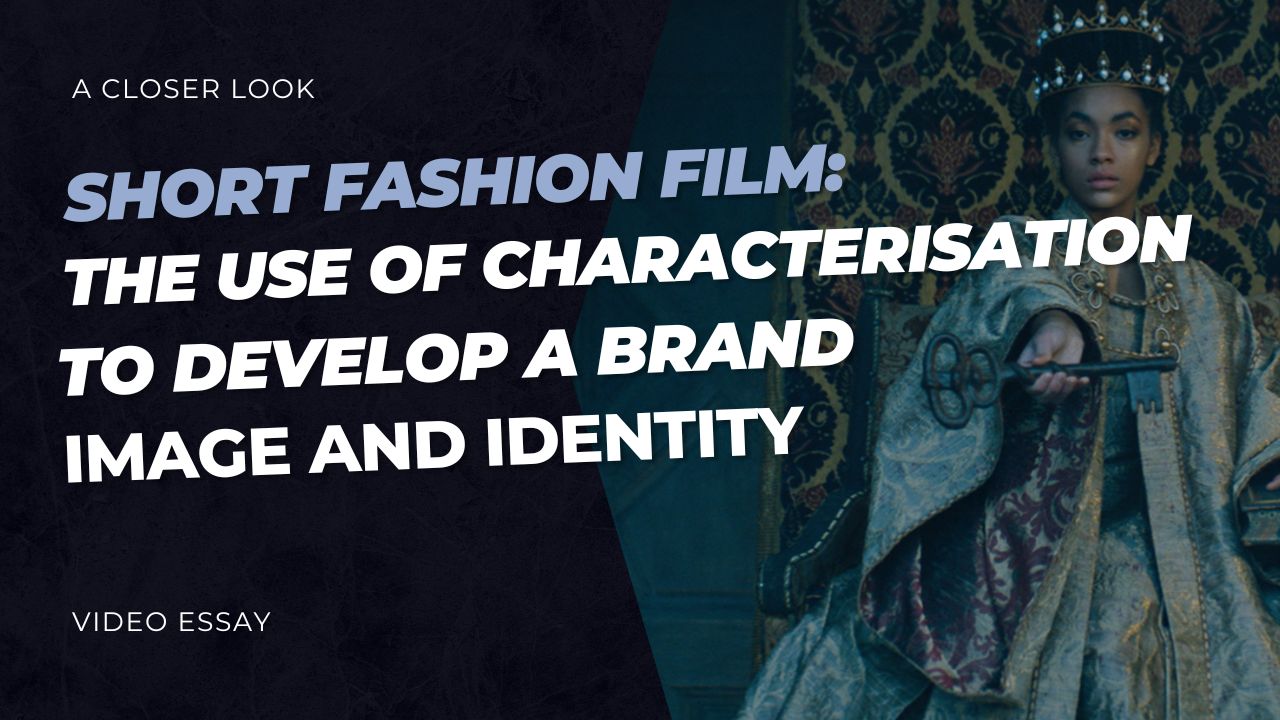
Characterisation is an increasingly important aspect of the fashion film – it allows a brand to push forward its identity and image. In this video essay, Harrison Armstrong focuses on the “short fashion film”, analysing how characterisation functions within a narrative to communicate brand identity.
Young video essayists comment on popular audio-visual culture. Produced as part of the BA (Hons) Film and Television degree at Solent University and brought to you by Making Waves Film Festival.
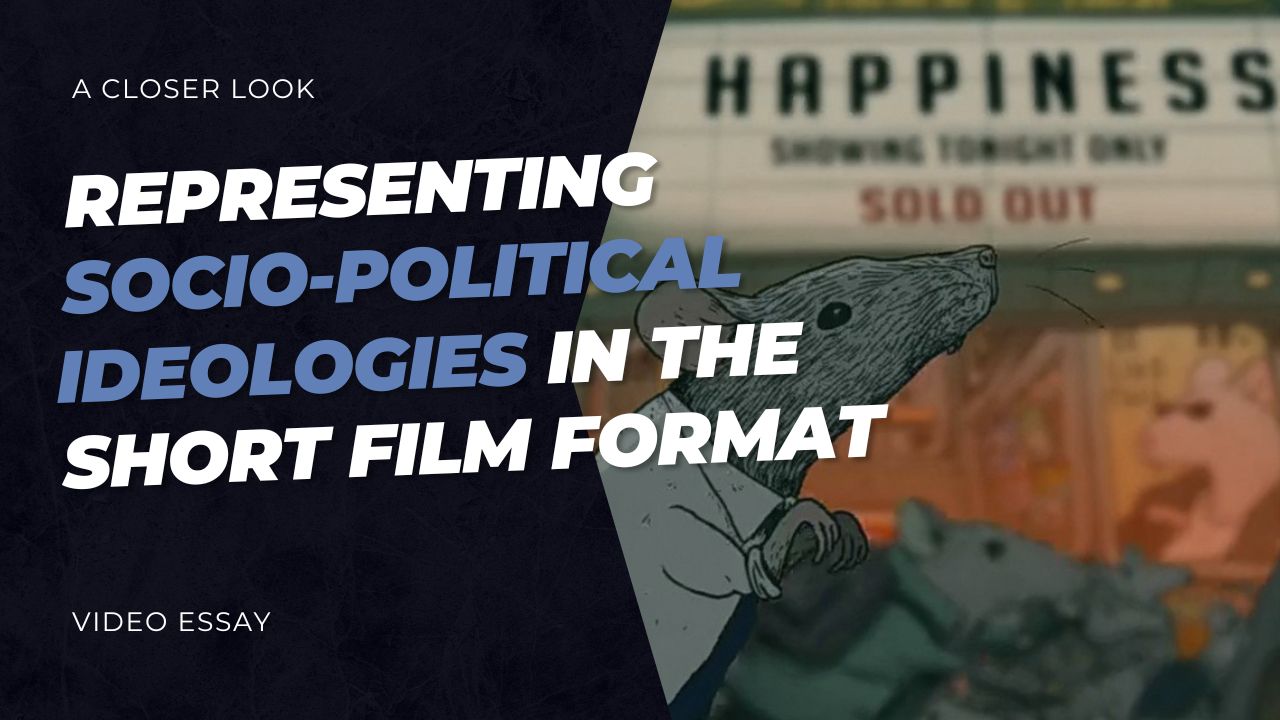
Animated films have historically been dismissed as merely children-only entertainment. Fortunately, audiences nowadays are savvier and understand its cultural significance. In this video essay, Jake Cooper looks closer at “Happiness” (2017), and how the director Steve Cutts uses the form to convey contemporary socio-political ideologies.
Young video essayists comment on popular audio-visual culture. Produced as part of the BA (Hons) Film and Television degree at Solent University and brought to you by Making Waves Film Festival.
Horror short films are a popular format and have cultivated an engaged audience through the years on online platforms such as YouTube. In this video essay, Sarah Perennou looks closer at David F. Sandberg’s short “Not Alone in Here” to shed some light on storytelling techniques used to build tension and create suspense in short films.
Young video essayists comment on popular audio-visual culture. Produced as part of the BA (Hons) Film and Television degree at Solent University and brought to you by Making Waves Film Festival.
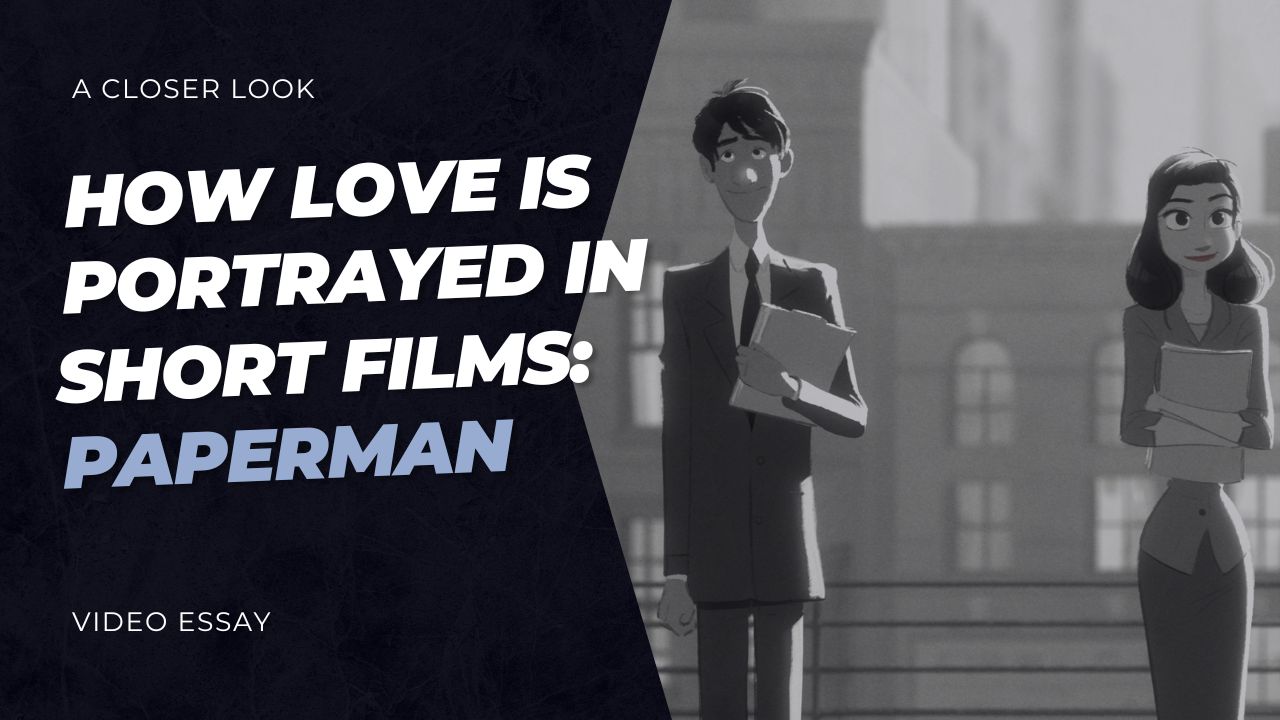
Reflecting on how love is portrayed in short films, Stefan Georgiev takes a closer look at the oscar-winning short film Paperman (2012). Stefan examines how elements like the lack of dialogue and the character-object dynamic play a significant role in the success of this format – when done well, making the stories ever more touching and compelling to watch.
Young video essayists comment on popular audio-visual culture. Produced as part of the BA (Hons) Film and Television degree at Solent University and brought to you by Making Waves Film Festival.
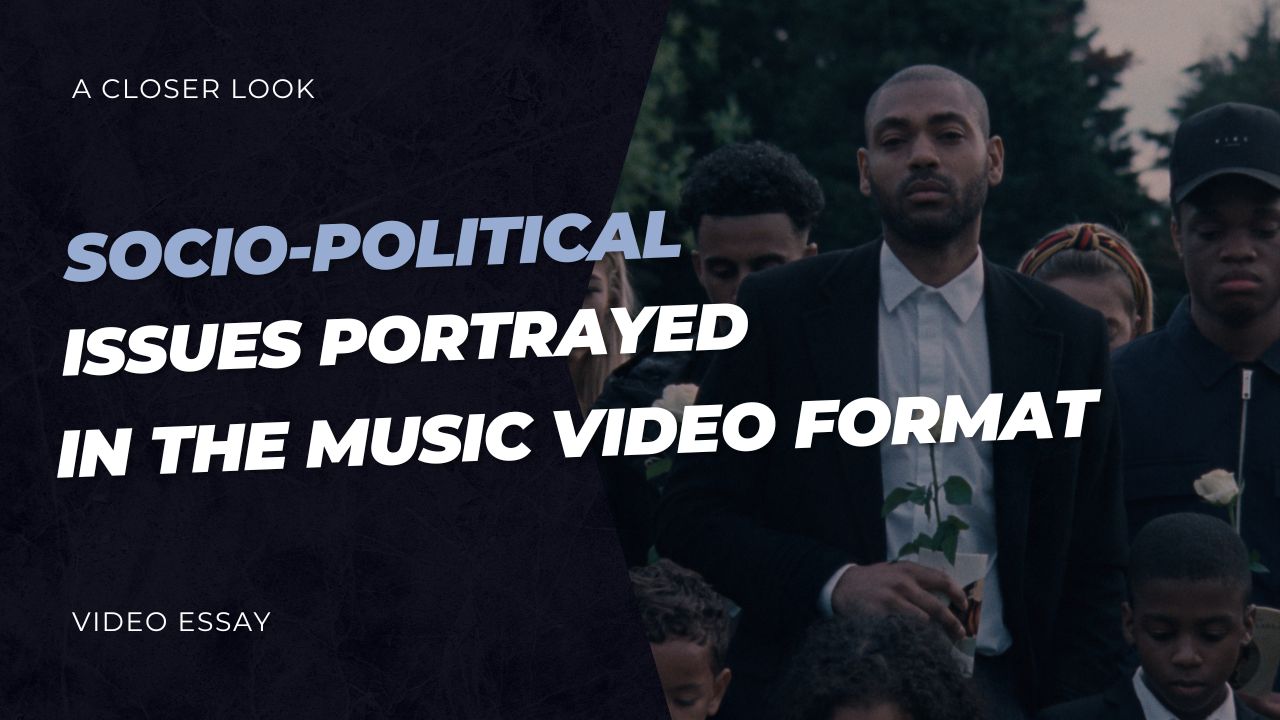
Music has always been influenced by politics, often being used as a form of activism. In this video essay, Hagen Maddock looks at some of the most vocal artists from the past decade and how their music video work reflects social and political issues in society.
Young video essayists comment on popular audio-visual culture. Produced as part of the BA (Hons) Film and Television degree at Solent University and brought to you by Making Waves Film Festival.
Music videos are one of the most watched short film formats nowadays. In this essay, Alice Dukes delves into the story of this subgenre of filmmaking, which some critics say has the potential to attach meaning to a song and increase the critical value of the medium. Alice takes a closer look to “Next to Me”, from Imagine Dragons – a piece that is the perfect hybrid of the short fiction film and the music video formats.
Young video essayists comment on popular audio-visual culture. Produced as part of the BA (Hons) Film and Television degree at Solent University and brought to you by Making Waves Film Festival.
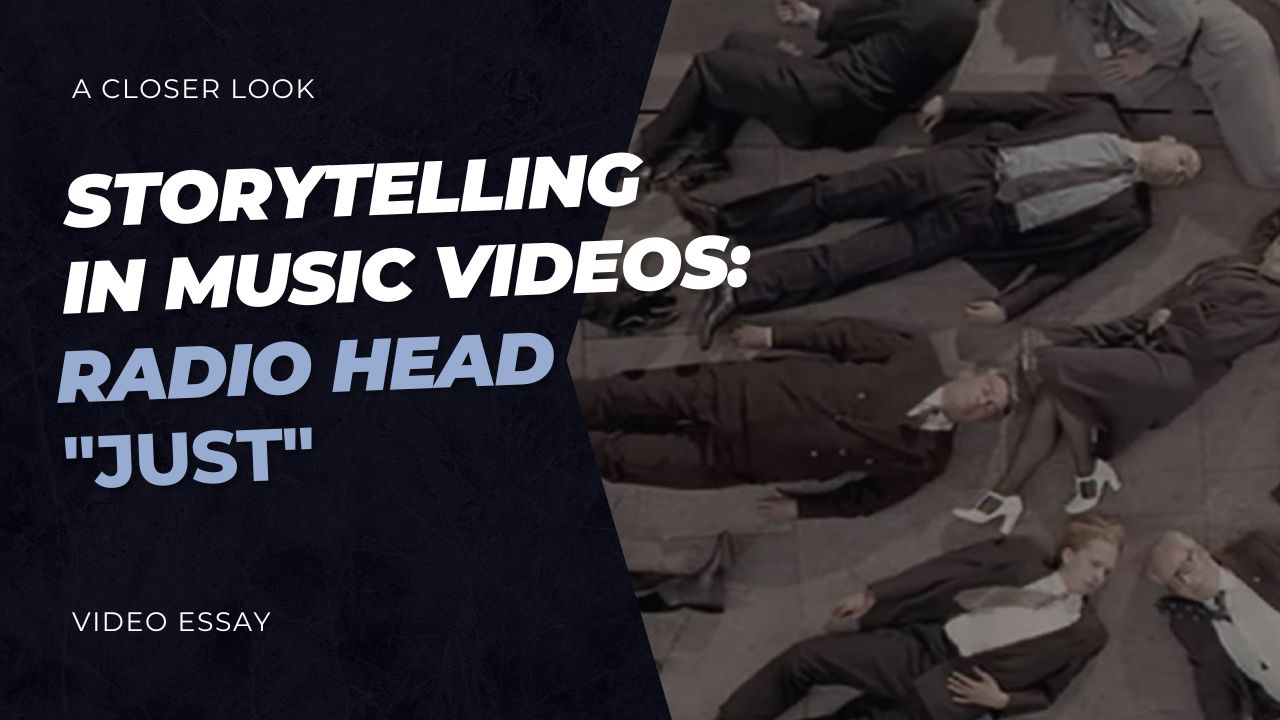
Are music videos limited by the nature of their format when it comes to telling a story? Does a music video undermine the song, or can it bring more character and nuance to it? In this short essay, Fergus McLean examines narrative-based music videos, paying special attention to the suite of videos from Radio Head. He argues that music videos are part of the storytelling spectrum and that when “these two art forms come together, they create something ‘more’”.
Young video essayists comment on popular audio-visual culture. Produced as part of the BA (Hons) Film and Television degree at Solent University and brought to you by Making Waves Film Festival.
Realism meets romance in Clio Barnard’s refreshing love story.
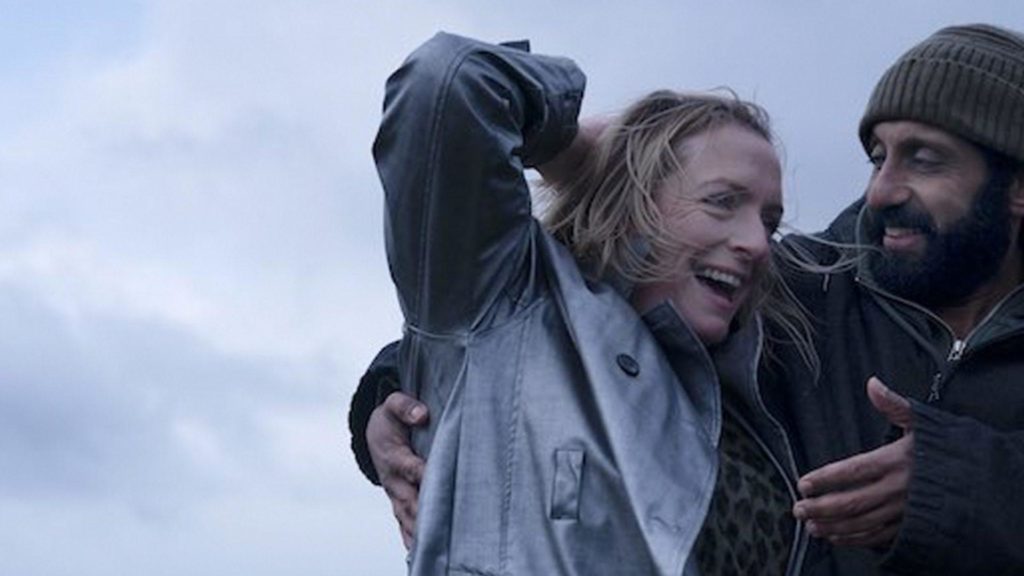
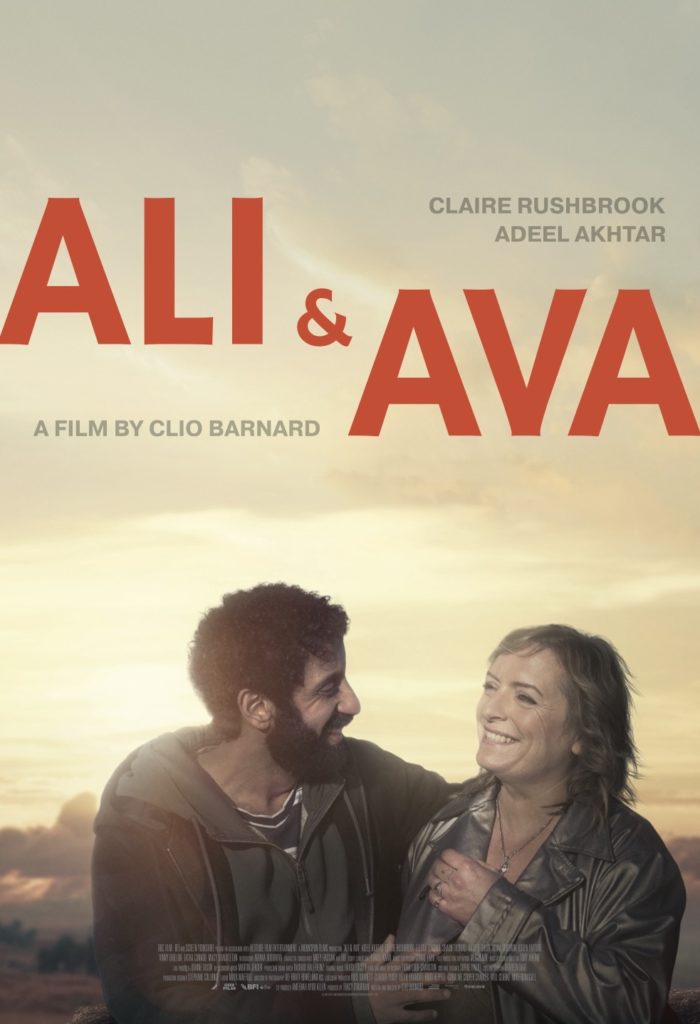
Nominated for two BAFTA’s (Outstanding British Film and Best Actor), Ali & Ava is the centrepiece of Making Waves Film Festival 2022. Written and directed by Clio Barnard, this contemporary romance is a bold move for one of Britain’s most talented and original filmmakers.
Barnard has earned widespread critical acclaim and multiple awards for The Arbor (2010), The Selfish Giant (2013) and Dark River (2017). Exploring dark and tragic themes across post-industrial and rural Yorkshire with a mix of professional and non-actors, her cinematic social realism and poetic naturalism has been compared to Ken Loach and Lynne Ramsay. Ali & Ava, a feel-good romance, might seem a surprising follow up.
Ali & Ava meet in the rain. Ali is a happy-go-lucky landlord who occasionally gives his tenants’ daughter Sofia a lift to school. Ava is Sofia’s classroom assistant. Ali & Ava’s first encounter is fleeting, little more than a glance. Their second is a rain-drenched journey across Bradford as Ali offers reluctant Ava a lift home. Add a frisson of sexual tension and we have a classic meet-cute. Sounds like the start of a romcom? It is… sort of.
Adeel Akhtar’s Ali and Claire Rushbrook’s Ava are the eponymous star-crossed lovers embarking on a secret romance. A Bradford-born DJ and landlord, Ali lives in the predominantly South Asian neighbourhood of BD3 with his estranged wife Runa. He is determined to keep their separation hidden from his Bengal British Muslim family.
Ava is a teaching assistant from an Irish Catholic family. A widow whose husband was an abusive bully, she lives in the white working class neighbourhood of BD4. Her house is always open, a revolving door of children and grandchildren.
Ali loves dance music and when Ava shares her love of folk and country he thinks their friendship is over before it has begun.
“Oh that’s it, that’s it for me,” he says jokingly offering to pull the car over.
But this is a love story and it’s not long before Ali is dancing on the sofa to Sylvan Esso’s Radio next to Ava singing along to Karen Dalton’s Something On Your Mind: a headphone disco for two. It’s an extraordinary scene, a worthy addition to any list of all-time-great-romantic-movie-moments.
Of course, once upon a time comes before happy ever after and Barnard’s middle-aged protagonists have plenty of obstacles to overcome. Ava’s son Callum is fiercely opposed to her new relationship and chases Ali from the house while wielding a sword. Ali is still desperately in love with his first wife who longs for him to reveal their separation to his family. Ava still struggles with the memory of her abusive partner. Thinking he’s having an affair, Ali’s sister accuses him of running around with a “gori (white) chav.”
The history of romance in film has been rocky to say the least. With the great love stories consigned to the 20th century golden age of cinema, for many the genre is now synonymous with “fluff,” “melodrama,” and “clichés.” It is interesting then to note that Ali & Ava marks an evolution, not a departure, from the sombre reflection of Barnard’s early work. While Barnard treads fearlessly onto romantic ground with Ali & Ava, she retains her trademark social realism.
“If you’re brave enough to climb up, you’ve got to be brave enough to climb down,” says Ava with practised patience to Sofia who gets stuck on the school climbing frame.
If you’re brave enough to show the love, you’ve got to be brave enough to show the pain. Such is the thesis of Ali & Ava. While the film leans into pain and trauma, it never dwells. Romance is tempered with reality and, in Barnard’s words, “joy becomes an act of defiance”. Nowhere is this clearer than when a group of schoolchildren throw stones at Ali’s car as he drives Ava home. Ali quickly wins them over by turning up the stereo in his car and encouraging them to sing and dance along.
As Ali & Ava cultivate space for love in their complicated lives, it becomes apparent that love is a choice. It doesn’t negate the pain, it isn’t a miracle cure. Sometimes choosing love is the more difficult choice. Barnard reminds us it’s the right one.
After all, she chose love when she decided to make a diagetic romantic musical set in Bradford. With its euphoric soundtrack, Ali & Ava is a love letter not just to its titular characters but to the city. Bradford is beautifully shot by Judy cinematography Ole Birkeland with twinkling lights, less a post-industrial wasteland waiting for the Conservatives to level up the North; more a city of hope. Unlike most romantic films the central couple don’t exist in a vacuum and neither does the film. As Ali and Ava are woven into the fabric of their community so is Barnard’s filmmaking, inspired by, made with and for the people of Bradford.
It feels important, during a time of divisiveness fuelled by politicians, Brexit polls and world events, to celebrate love and kindness. To be reminded that within the ordinary everyday we can find the most extraordinary capacity to love.
Yes, Ali & Ava is a love story. It’s also more than that. With exquisite writing, sensitive direction and mesmerising performances, Barnard’s film reminds us that the language of love is universal. More than ever we need a language we all speak to connect us and although happy ever after might not be guaranteed (no spoilers here), once upon a time is today. Love is a choice.
Making Waves Film Festival will present a special screening of Ali & Ava preceded by a Wave Makers Q&A with Score Composer Harry Escott, winner of the Best Music British Independent Film Awards 2021. Thursday 21 April at 7pm, No 6 Cinema, Portsmouth. Book online via No 6 Cinema.
The extravagant visual style of Wes Anderson is one that has been discussed a lot in the world of film and for good reason. He is a major inspiration for my interest in film and filmmaking. I am in awe of the unique way Anderson brings storytelling to life and the relationship between all the visual, cinematic and technical elements presented in his films. So, let’s explore further exactly what it is that makes a Wes Anderson film the way it is.
Symmetry
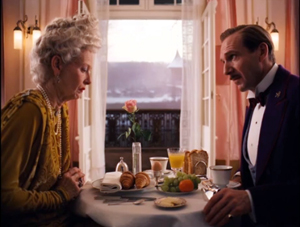
Symmetry is one of the most notable Anderson features. Action on screen is unusually centralised and/or mirrored which draws our attention to the precision involved. Plus, the psychological connection between the human brain and symmetry could explain why its use is so mesmerising.
The French Dispatch (2021)
Planimetric Composition (and Compass Point Editing)
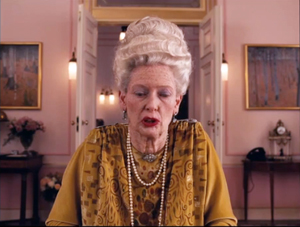
Planimetric composition (when the camera is perpendicular to elements of the scene) is what makes his shots appear two dimensional. Characters generally move horizontally or vertically in relation to these plains and the camera. Anderson also uses compass point editing techniques such as whip pans in 90 degree increments to maintain this composition. The resulting effect? The filmic space looks and feels constructed and the viewer is likely conscious of this fact. The debate here is whether this effectively contributes to the cinematic experience or if it takes the viewer out of the film instead.
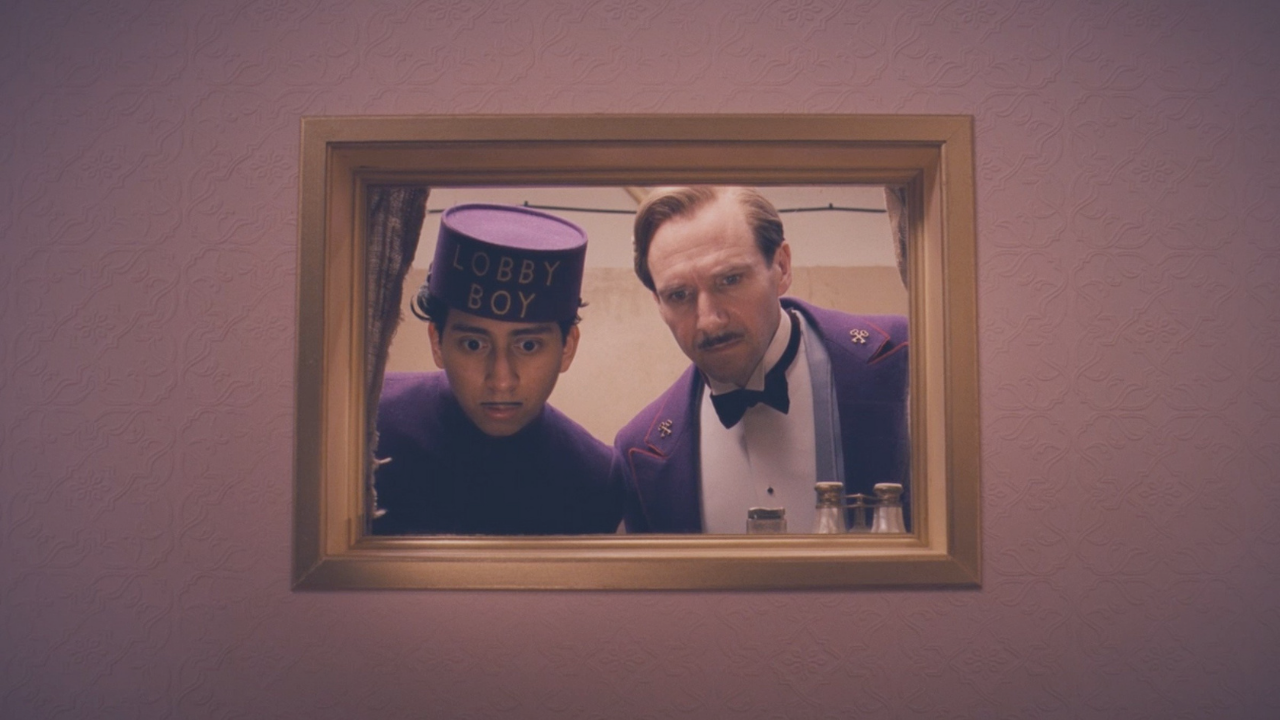
The Grand Budapest Hotel (2014)
Colour
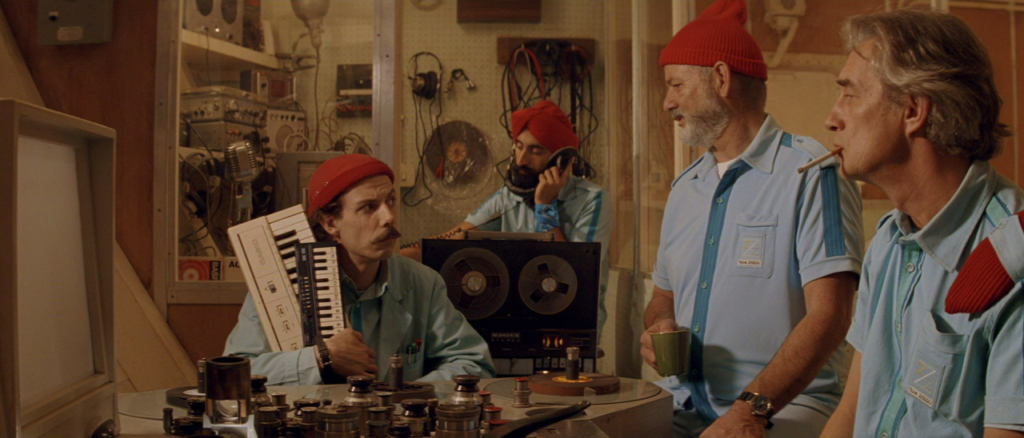
Another stand out feature of the Wes Anderson style is colour. Notably, each movie has its own colour palette – usually charming pastel colours. When he does use bright colours, it is in contrast to sad events. This overall exaggerated use of colour creates a world far removed from reality which allows Anderson to get away with more extraordinary plots.
The Life Aquatic with Steve Zissou (2004)
Storytelling
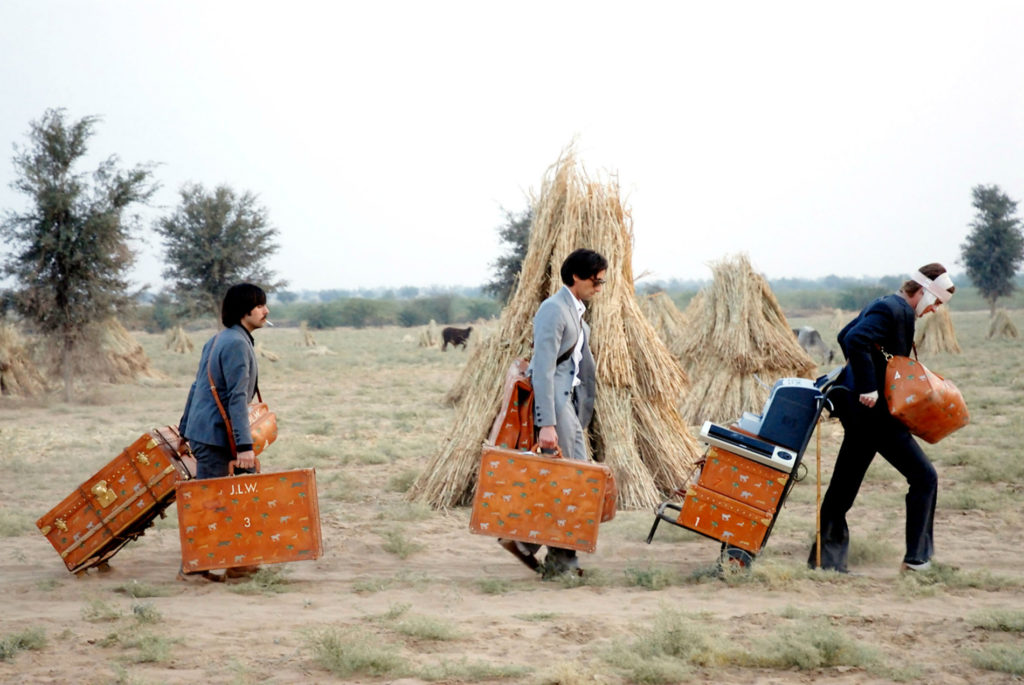
As a common thread, Wes Anderson films seem to want to highlight the ‘cinema’ of it all rather than hide the filmmaking. His films are often presented as stories within stories: Moonrise Kingdom (2012) has a narrator who speaks to the camera, Rushmore (1998) uses curtains to separate chapters like a play, and The Darjeeling Limited (2007) has a character who seems to be writing the story we’re inside of.
The Darjeeling Limited (2007)
It’s almost impossible to talk in depth about absolutely everything that goes into a Wes Anderson film. There’s also slow motion, tracking shots, typography and more. However, the points I’ve chosen to discuss start to break down key visual and aesthetic choices. Might go and rewatch The Grand Budapest Hotel for the fifth time now…
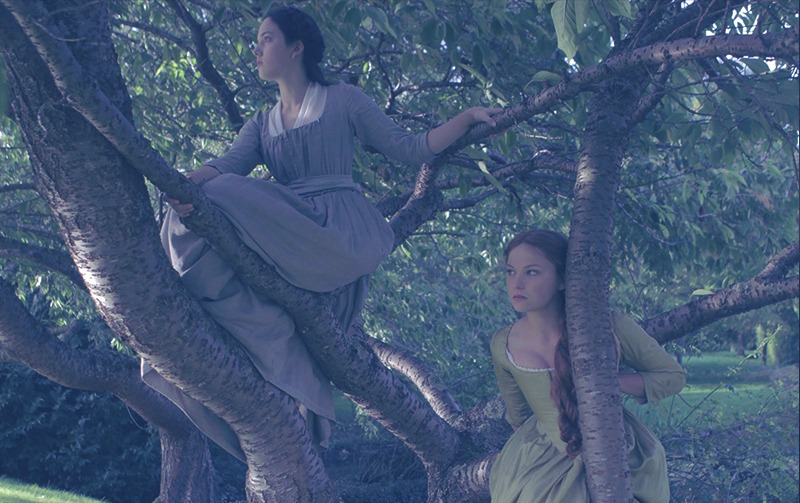
For her first solo-directorial credit, Emily Harris has stripped Carmilla of its vampiric nature and instead explores deeper themes of repression, superstition and adolescent love.
Set in late 18th Century rural England, Carmilla is a tender and tragic love story between two young girls. Based on gothic literature, this tale of blossoming adolescent sexuality takes place at a time when religion, repression, fear, and superstition ruled society.
At the helm, is writer-director Emily Harris, who set out to steer Carmilla away from traditional costume dramas.
For Harris, this was her first time taking a solo directorial credit, after co-directing Love Is Thicker Than Water(2016) with Ate de Jong. Harris has always been a collaborator, and found co-directing natural, but Carmilla felt different. To Harris, this one made a lot of sense to do by herself.
Harris began writing the script after she came across Carmilla, a gothic novella by Irish writer Joseph Sheridan Le Fanu.
Keen to remove the vampiric thread within the story Harris says: “I was more interested in understanding the root of that literature. Why were people writing about that? What does it symbolize and signify and what’s the human story underneath it?”
The search for actresses to play lead characters was believed to be fundamental to the success of the project. Harris admits, “I kept saying, ‘If we don’t find Carmilla and Lara, we don’t make this. There’s no way.”
Finding the actress to play Carmilla was a Eureka moment. Newcomer Devrim Lingnau sent in a series of self-taped auditions and it was clear that she instinctively understood the character.
British actress Hannah Rae, cast as Lara, was bowled over by Harris’ script. “I visualised it in my head straight away. And so that’s what attracted me initially”. Rae’s only previous feature was in the TV drama Broadchurch.
Join us for a pre-screening Q&A with Emily Harris, hosted by Professor Deborah Shaw, from the University of Portsmouth, at our screening of Carmilla at the No6 Cinema on 16th September.
Tickets: £9, Concessions £7.50, 25 & Under £5.00, CEA Carer £0.00
If you would like to find out more about No6 Cinema then make sure to follow them on Twitter, Instagram and join their Facebook page.
NOTE: all events are subject to government restrictions on safe distancing and public gatherings and will be risk assessed accordingly. As events progress, we will update you on our plans for the live film festival programme in case of changes to what may be possible at the time.
A MWFF event in partnership with No.6 Cinema and Republic Film Distribution.