Category: Moving Image Criticism

Moving Image Criticism

The Making Waves Film Festival proudly showcases the finest in videographic criticism, featuring an exceptional selection of works by young video essayists from Solent University.

These emerging talents offer insightful commentary on popular audio-visual culture.

Moving image criticism is an innovative approach to analyzing and evaluating films, television shows, and online video content through the use of video essays, digital editing, and multimedia presentations. This dynamic form of criticism leverages the visual and auditory elements of the media it examines, offering in-depth insights into narrative structures, cinematography, and cultural impact. Accessible to both professionals and enthusiasts, moving image criticism enriches the conversation around visual media, making it an essential aspect of contemporary media analysis.

  • A Closer Look: Moving Image Criticism – Creating Engaging Narrative

    Creating Engaging Narrative

    By Callum Tomalin

    How does Wallace and Gromit use short film to create an engaging narrative.

    If you love stop motion films, engaging narratives, Ardman Animations or are just a huge fan of Wallace and Gromit I would highly recommend you check out this video which gives a great descriptive insight into the world of Wallace and Gromit and how they use short film to create an engaging narrative. In this video Callum does an excellent job of highlighting the unique way the narrative works and affects us from the film ‘Walace and Gromit: The Wrong Trousers,’ as someone who has not seen the classic since I was a child it was great to see an explanation of what made it so great, as I would have taken the narrative and ways of engagements for granted. Because of what Callum states in this video, it has made me want to re-visit ‘The Wrong Trousers’ to watch the story unfold with a better understanding of what makes the film tick as well as venture into the other movies that Callum mentions (A Grand Day out to be precise).

    Young video essayists comment on popular audio-visual culture – Making Waves Film Festival brings you the best in videographic criticism.

    Produced as part of the BA (Hons) Film and Television degree at Solent University

    TWITTER @FilmTVSolent

    FACEBOOK https://www.facebook.com/FilmSolent

  • A Closer Look: Moving Image Criticism – Slow Cinema

    Slow Cinema

    By Cameron Niblock

    Temporality in Slow Cinema – A critical analysis on the Long-Take & it’s application to ‘prologue’ by Béla Tarr & ‘No No Sleep’ by Tsai Ming-Liang.

    Do not be daunted by the elaborate title, Cameron easily guides you through this intriguing, specific look at the “Long-Take” in film both old and new most specifically how it is utilized as a story telling tool used in slow cinema. As someone who watches quite a bit of film you might have seen some of the shots that Cameron shows us, what you like me might not know is how the shot itself can affect us and change the way we view the film bringing us closer into the narrative. And if you perhaps know about the “Long-Take” and all the interesting details about why it is used, how it impacts the narrative and how it is used in slow cinema, I believe you should still watch this video to learn about the different directors who utilize this shot as well as get great new film suggestions for your watchlist you might not have heard of before. After watching this prolific analysis, I went straight to my streaming services to see if I could find one of the directors Cameron talks about Béla Tarr. This video is a fantastic way to brush up on your shot types and see if you can spot any long takes in any of your favourite films.

    Young video essayists comment on popular audio-visual culture – Making Waves Film Festival brings you the best in videographic criticism.

    Produced as part of the BA (Hons) Film and Television degree at Solent University

    TWITTER @FilmTVSolent

    FACEBOOK https://www.facebook.com/FilmSolent
  • A Closer Look: Moving Image Criticism – Take me to church

    A Closer Look: Moving Image Criticism – Take me to church

    Take me to church

    Roberta McPherson

    How does the music video ‘Take Me To Church’ explore the intersection of religion and politics?

    As a fan of Hozier and in particular a fan of this song as well I was extremely excited to watch a dissection and exploration of the different themes represented in the music video. As well as the music video I was also treated to the variation of political iconography in music videos as a warmup to the main concept which when written down seems rather daunting but thankfully Roberta talks about these subjects so specifically and expertly that it was easy to understand, even though previously I had no idea what political iconography even meant. I was particularly impressed when Roberta started to talk about the different shot types of the music video and how it correlated with the themes. Overall, I thoroughly enjoyed this video which taught me knew and exciting ways I can interpret different themes and learnt a lot more about ‘Take Me To Church’ itself, I would recommend this to anyone who is interested in complex themes of music videos and how they come across as well as anyone who wants to know more about the music video for ‘Take Me To Church’.

    Young video essayists comment on popular audio-visual culture – Making Waves Film Festival brings you the best in videographic criticism.

    Produced as part of the BA (Hons) Film and Television degree at Solent University

    TWITTER @FilmTVSolent

    FACEBOOK https://www.facebook.com/FilmSolent
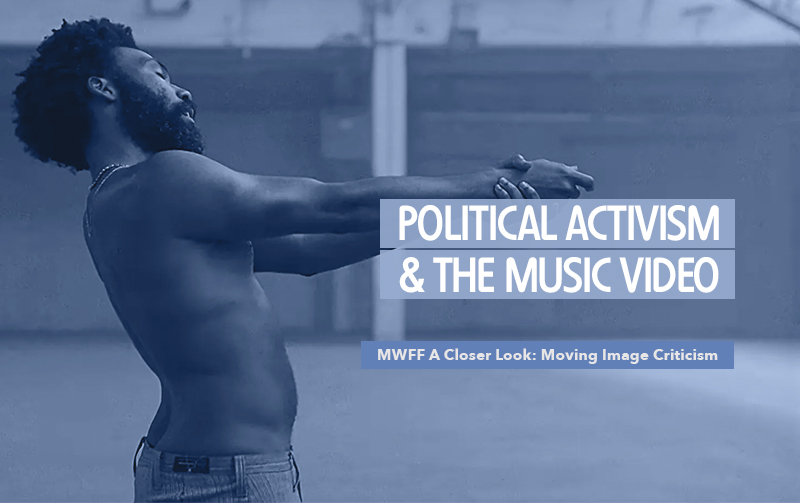
  • A Closer Look: Moving Image Criticism – Political Activism & the Music Video

    A Closer Look: Moving Image Criticism – Political Activism & the Music Video

    Political Activism & the Music Video

    By Ambur Walker

    The rise in social and political activism within the music video form.

    In this video Ambur Walker expertly peels back music videos to reveal and talk about the activism involved in them, the rise of social media being connected to artists not being constricted to advertisement getting to promote themselves for free and allowing more creative freedom in their work. Ambur explains how because of this independence there is a possibility for political activism, there is some great references and examples throughout the video, some of which I did not even know were political really opening my eyes to the creativity of music artists and teaching me to be more engaged with their music videos. This video overall makes me want to search through some of my favorite music videos and see if I can identify some messages behind the actions if there are any at all. I think this is a great watch if you at all interested in music videos and the statements that can be made in them; it is a fun, intriguing and knowledgeable look at the music industry as well as the politics around it.

    Young video essayists comment on popular audio-visual culture – Making Waves Film Festival brings you the best in videographic criticism.

    Produced as part of the BA (Hons) Film and Television degree at Solent University

    TWITTER @FilmTVSolent

    FACEBOOK https://www.facebook.com/FilmSolent
  • A Closer Look: Moving Image Criticism – La Luna

    A closer look at La Luna

    By Lucy Whiting

    How are family and childhood themes represented in short films? A closer look at La Luna (2011).

    If you have ever wanted to explore the themes and complexity of the Pixar animated films themself or just wanted to know more about them look no further, this short video is a great insight into the world of the animated short films. As Lucy does include quite a lot of information on the infamous Pixar short films we all know and love I would just like to slide in here and state that my personal favorite is “For The Birds”. Lucy explores how family and childhood themes are represented in these short films (Mainly “La Luna”) from the different design decisions and mise en scene, as a fan of animated shorts Lucy opened my eyes and honestly surprised me with how much meaning each little aspect of the films have. With COVID affecting loads of families around the world exploring the themes and intricacies represented in short films might be the perfect start to get us all closer together again. Overall a great deep dive in an interesting topic which will make you look at animated films differently.

    Young video essayists comment on popular audio-visual culture – Making Waves Film Festival brings you the best in videographic criticism.

    Produced as part of the BA (Hons) Film and Television degree at Solent University

    TWITTER @FilmTVSolent

    FACEBOOK https://www.facebook.com/FilmSolent
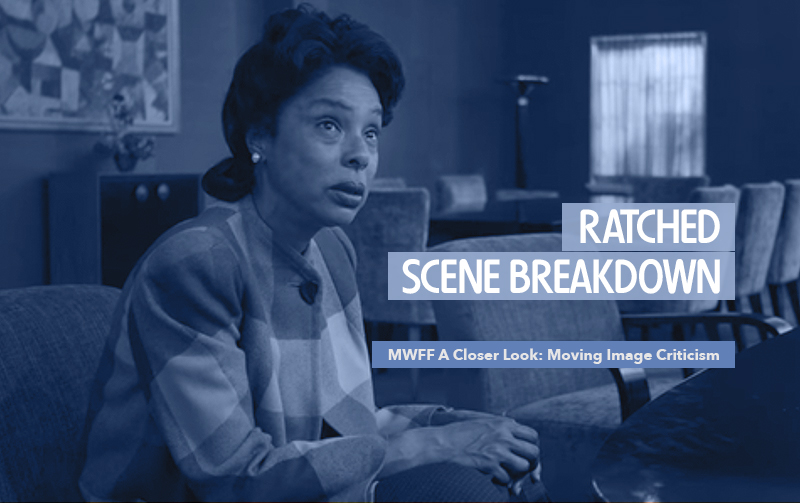
  • A Closer Look: Moving Image Criticism – Ratched

    A Closer Look: Moving Image Criticism – Ratched

    Ratched

    By Harrison Armstrong

    Cinematic choices and performance in Ratched

    In this video Harrison expertly explains the cinematography and performances of ‘Ratchet’, what make this video truly shine is that Harrison also comments on the ideological implications which underpin the cinematography’s choices. Now I know that seems like quite a daunting and confusing task but as someone who is generally confused myself, I was swept away by the ease of description and Harrison’s knowledge of cinematography. What was particularly enlightening was how Harrison talks you through the use of depth of field and how the film uses the space between the audience and the character to isolate them, as someone who loves how a movie operates and wants to know more about how the cinematography affects us as an audience this video was perfect. I recommend this video to anyone who wants to explore a more in depth analysis on cinematography and its implications.

    Young video essayists comment on popular audio-visual culture – Making Waves Film Festival brings you the best in videographic criticism.

    Produced as part of the BA (Hons) Film and Television degree at Solent University

    TWITTER @FilmTVSolent

    FACEBOOK https://www.facebook.com/FilmSolent
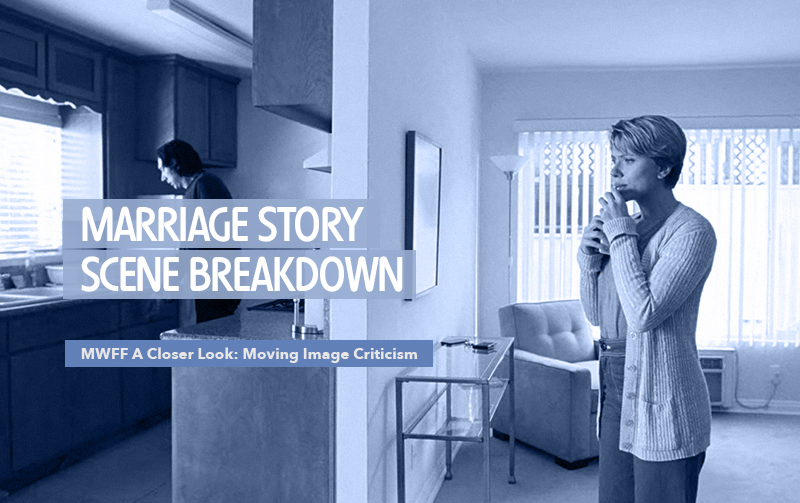
  • A Closer Look: Moving Image Criticism – Marriage Story

    A Closer Look: Moving Image Criticism – Marriage Story

    Marriage Story

    By Ebony Organ

    How marriage story creates meaning for the audience

    As a fan of ‘Marriage Story’ I was excited to learn about how it affected me, how did the film use mis en scene to create meaning? As I know how the film made me feel but not know the tools in which it used to do so, I was intrigued. This video offers a fantastic critical analysis of one of the film’s most impactful and memorable scenes, Ebony explains perfectly about each of the characters finding their voices as well as give a dynamic look at the mis en scene used and how it affects the feelings I had when I watched this film. I also Learn’s more about the effect of a single apple carton than I ever even really noticed in the film, if you are interested in ‘Marriage Story’ and want to find out about the relation to how mis en scene affects us then I implore you to watch this video.

    Young video essayists comment on popular audio-visual culture – Making Waves Film Festival brings you the best in videographic criticism.

    Produced as part of the BA (Hons) Film and Television degree at Solent University

    TWITTER @FilmTVSolent

    FACEBOOK https://www.facebook.com/FilmSolent
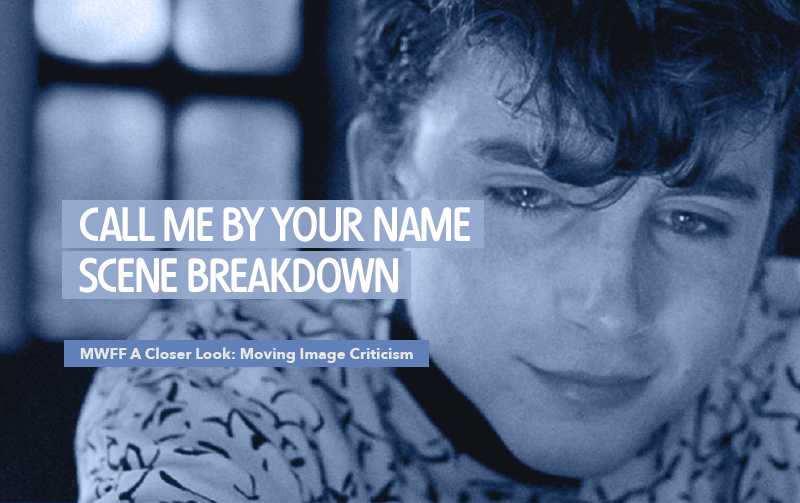
  • A Closer Look: Moving Image Criticism – Call Me by Your Name

    A Closer Look: Moving Image Criticism – Call Me by Your Name

    Call Me by Your Name Scene Breakdown

    By Jake Cooper

    Breaking down a scene in Call Me by Your Name reveals hidden layers of meaning

    As I have not watched Call Me by Your Name and have not heard much about it I was quite interested watching in this video Like most videos, to find out more about what I don’t know. From the get-go it is quite difficult to have a sense of humour even when critically reflecting but there is some in this video which you can see when Jake talks about a particular moment in the film and relates it to American culture and other circumstances (you’ll have to watch the film to see). What I found most interesting about this video is how Jake guides us through the editing of the scene and how it creates a somber tone, the level of depth he involves us in really is a credit to his understanding of the scene and makes it easy to listen and follow along with his commentary. I would recommend this video to anyone who wants to dive deeper into Call Me By Your Name or who wants to find out more about screen language.

    Young video essayists comment on popular audio-visual culture – Making Waves Film Festival brings you the best in videographic criticism.

    Produced as part of the BA (Hons) Film and Television degree at Solent University

    TWITTER @FilmTVSolent

    FACEBOOK https://www.facebook.com/FilmSolent

  • A Closer Look: Moving Image Criticism – The Ballad of Buster Scruggs

    A Closer Look: Moving Image Criticism – The Ballad of Buster Scruggs

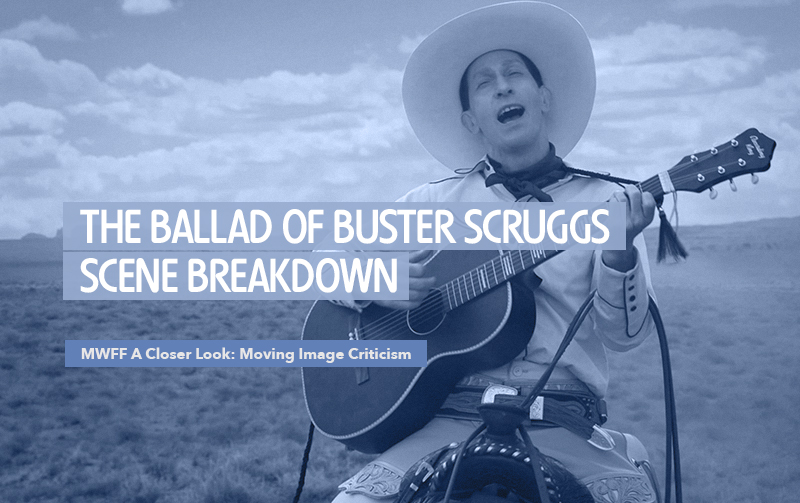
    The Ballad of Buster Scruggs

    By Becky Holmes

    Semiotic ballads and audience manipulation in the Ballard of Buster Scruggs

    This video takes us through the first scene of the film and how cinematography, mise en scene and sound create meaning for the viewer with a semiotic approach, I honestly did not know what that meant beforehand but as I find out in the video it is an investigation into how meaning is created and how meaning is communicated. Academic words aside Rebecca perfectly explains how and what is being communicated to the audience from this first scene, although I have not watched The Ballad Of Buster Scruggs the way in which she takes us through the opening and being given small outsider details that I would not have picked up on watching myself makes me excited to watch the rest of the film.  What else in this video which I thought was mind-blowing was that Rebecca also reveals what we as an audience are programmed from viewing the theme and shown a certain type of film to expect what is coming up later in the film i.e violence, good guys and bad guys, for more crazy facts and an interesting dialogue I suggest you watch this video.

    Young video essayists comment on popular audio-visual culture – Making Waves Film Festival brings you the best in videographic criticism.

    Produced as part of the BA (Hons) Film and Television degree at Solent University

    TWITTER @FilmTVSolent

    FACEBOOK https://www.facebook.com/FilmSolent

  • A Closer Look: Moving Image Criticism – Breaking Bad

    A Closer Look: Moving Image Criticism – Breaking Bad

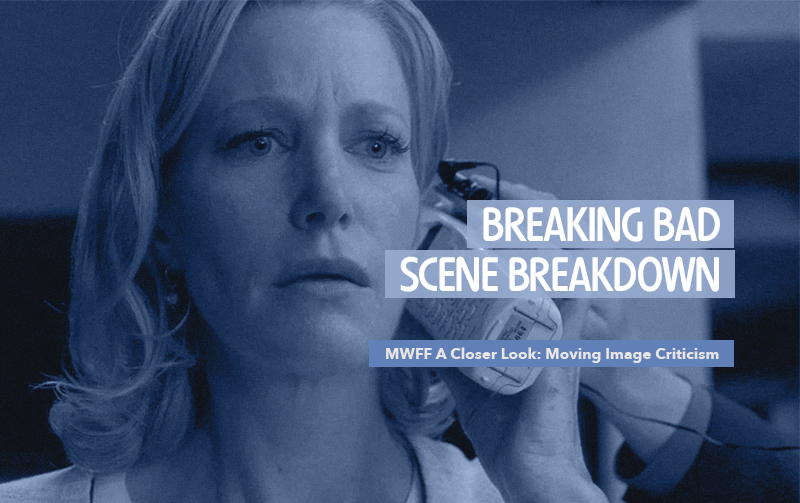
    Breaking Bad Scene Breakdown

    By Stefan Georgiev

    Breaking down a scene in Breaking Bad reveals hidden layers of meaning

    As Breaking Bad is one of the biggest and most popular Netflix series of all time I am sure you have heard about it, you might even have watched it, What Stefan does is highlight an incredibly important scene in the series and shows how impactful each individual part of the scene actually is, creating this whole new respect for the effort employed in this scene from each part of the production. What you will find in this video is how meaning is created through the mise en scene, performances, the structure of the show and even how impactful the editing is, Stefan spare’s no expenses when exploring the scene, he chooses. If you are a breaking bad fan or just love the different intricacies in film and television then this is a great critical commentary to explore exactly what made Breaking Bad such a success and why you should watch it/re-watch it. Hats off to Stefan for finding and explaining the different aspects of the scene which really made look at the series differently and from different aspects like how it is edited and what clothes they wear.

    Young video essayists comment on popular audio-visual culture – Making Waves Film Festival brings you the best in videographic criticism.

    Produced as part of the BA (Hons) Film and Television degree at Solent University

    TWITTER @FilmTVSolent

    FACEBOOK https://www.facebook.com/FilmSolent