Tag: Local community

  • The Cinematic Style of Wes Anderson

    The Cinematic Style of Wes Anderson

    The extravagant visual style of Wes Anderson is one that has been discussed a lot in the world of film and for good reason. He is a major inspiration for my interest in film and filmmaking. I am in awe of the unique way Anderson brings storytelling to life and the relationship between all the visual, cinematic and technical elements presented in his films. So, let’s explore further exactly what it is that makes a Wes Anderson film the way it is.

    Symmetry

    Symmetry is one of the most notable Anderson features. Action on screen is unusually centralised and/or mirrored which draws our attention to the precision involved. Plus, the psychological connection between the human brain and symmetry could explain why its use is so mesmerising.
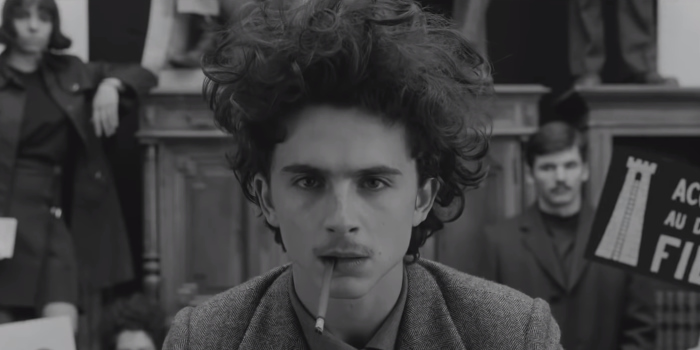
    Timothee Chalamet in Wes Anderson's The French Dispatch
    The French Dispatch (2021)

    Planimetric Composition (and Compass Point Editing)

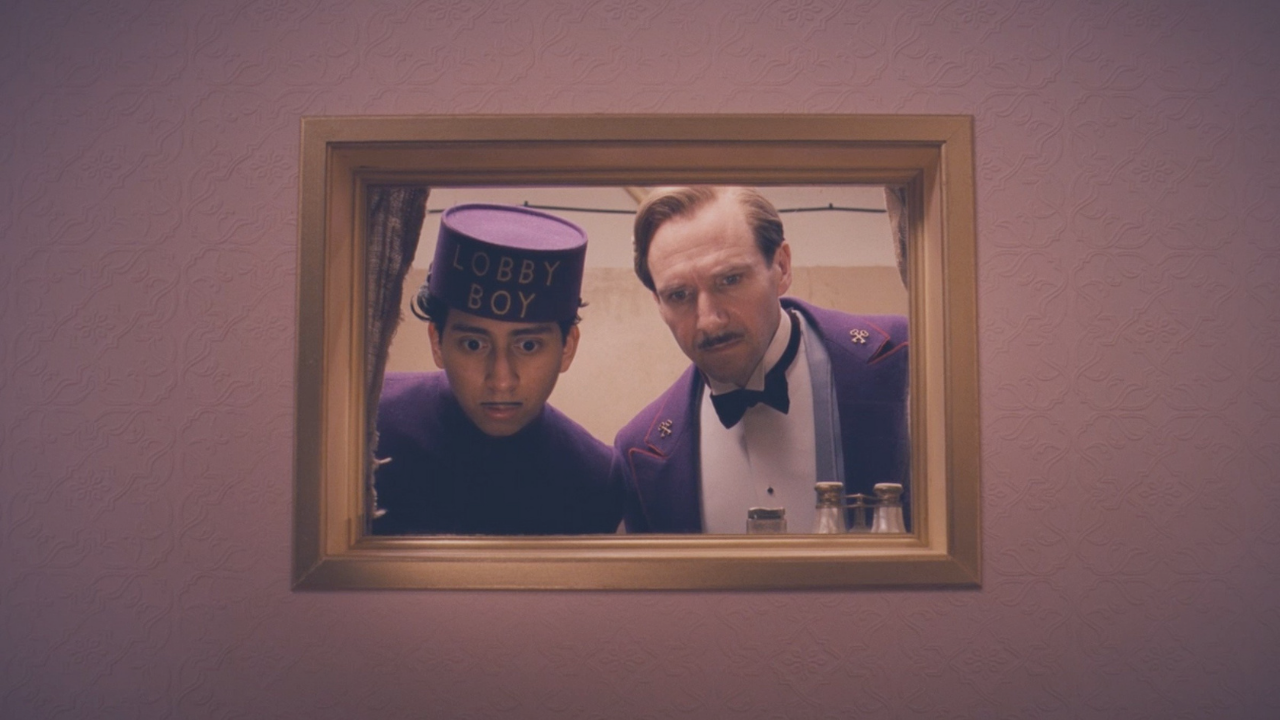
    Planimetric composition (when the camera is perpendicular to elements of the scene) is what makes his shots appear two dimensional. Characters generally move horizontally or vertically in relation to these plains and the camera. Anderson also uses compass point editing techniques such as whip pans in 90 degree increments to maintain this composition. The resulting effect? The filmic space looks and feels constructed and the viewer is likely conscious of this fact. The debate here is whether this effectively contributes to the cinematic experience or if it takes the viewer out of the film instead.
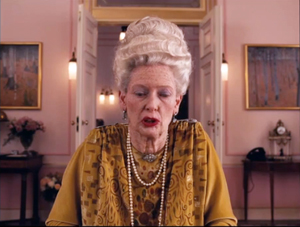
    The Grand Budapest Hotel (2014)

    Colour

    Another stand out feature of the Wes Anderson style is colour. Notably, each movie has its own colour palette – usually charming pastel colours. When he does use bright colours, it is in contrast to sad events. This overall exaggerated use of colour creates a world far removed from reality which allows Anderson to get away with more extraordinary plots.
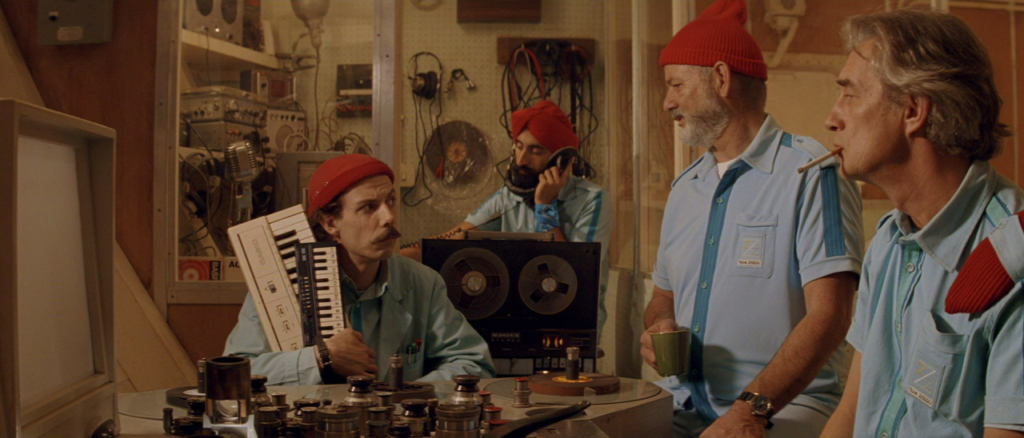
    The Life Aquatic with Steve Zissou (2004)

    Storytelling

    As a common thread, Wes Anderson films seem to want to highlight the ‘cinema’ of it all rather than hide the filmmaking. His films are often presented as stories within stories: Moonrise Kingdom (2012) has a narrator who speaks to the camera, Rushmore (1998) uses curtains to separate chapters like a play, and The Darjeeling Limited (2007) has a character who seems to be writing the story we’re inside of.
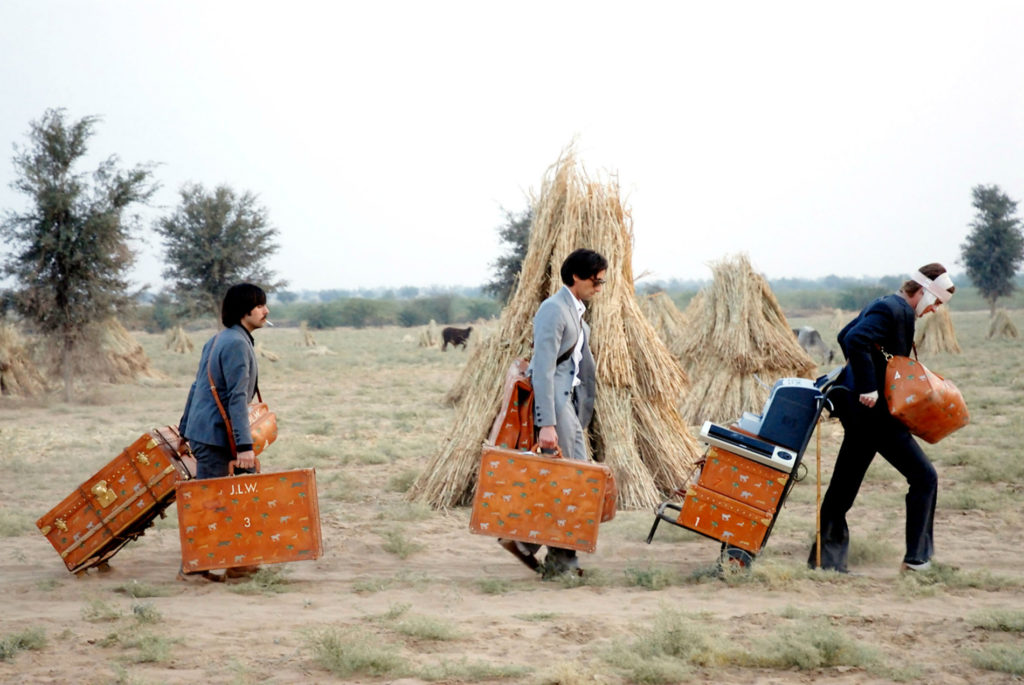
    The Darjeeling Limited (2007)

    It’s almost impossible to talk in depth about absolutely everything that goes into a Wes Anderson film. There’s also slow motion, tracking shots, typography and more. However, the points I’ve chosen to discuss start to break down key visual and aesthetic choices. Might go and rewatch The Grand Budapest Hotel for the fifth time now…
  • Local Talent Spotlight: Trash Arts

    Local Talent Spotlight: Trash Arts

    Next up in the Making Waves initiative to explore Portsmouth’s local creative community and why they do what they do is indie-focused production company Trash Arts. Below is just a snippet of what they got up to in 2021!

    Trash Arts is “a collective of creative minds” that aims to champion all forms of art. They have made short films, feature films, music videos, promotional videos, and documentaries. They also host spoken word and poetry nights and variety shows for example Trash Arts’ Open Ya Mouth which encourages performers of all levels to have a go at an open mic event.

    Here Sam Mason Bell, founder of Trash Arts and ex-director of Making Waves Film Festival, gives his thoughts on the Portsmouth filmmaking scene:

    How would you describe what Trash Arts does to those coming across you for the first time?

    “Trash Arts is a production company focusing on independent films and indie horror, growing new talent and championing indie filmmakers.”

    What is it about Portsmouth and the wider Hampshire area that you think makes it such a great place for filmmakers and creatives?

    “I am born and raised in Portsmouth; it has [a] fantastic development structure [and] you can go through the poorest housing to the richest housing within a heartbeat. Sure that’s not great for the country or for the people but to have [a] richness of locations close by certainly helps. Having the seaside, the woods, Portsdown Hill so close is fantastic! Not going to lie, will always feel the city council should do more to allow free locations for film makers, maybe one day…”

    Why do you think a film festival in Portsmouth is so important?

    “Portsmouth has had a problem with supporting its artists, whether that’s down to lack of interest from the city council or the hideous competitive nature of Portsmouth. A film festival offers an opportunity for artists to be supported and for them to network with other artists. Also with so many emerging film festivals it can only help to entice an audience down to Portsmouth for the city to actually have an event!” Make sure to check out Making Waves’ film festival programme for 2022.

    What’s going on at your company right now or in the coming months that you’d like to promote?

    “Trash Arts has a few films in pre and post production. This year we are taking more of a creative focus on Portsmouth, its history and its rather crazy folklore.”

    You can find more information about Trash Arts through their youtube channel and their social media pages linked here:

    Instagram: https://www.instagram.com/trashartsuk/?hl=en 

    Facebook: https://www.facebook.com/trashartsuk/ 

    Twitter: https://twitter.com/trashartsfilm

    LinkedIn: https://www.linkedin.com/company/trash-arts-ltd/

  • Riyadh Haque on Film Festival Communities

    Riyadh Haque on Film Festival Communities

    I spoke with University lecturer and active practitioner, Riyadh Haque, about his take on the role of a film festival among county-wide communities as well as his personal career before, and during, his residency in Portsmouth. 

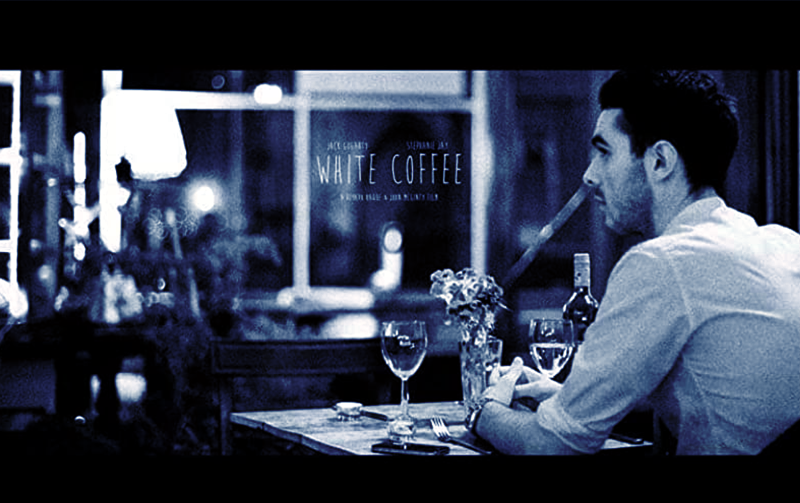
    (‘White Coffee’ – A short film directed by Riyadh Haque)

    Riyadh, What filmmaking or media projects have you worked on locally, in the Hampshire area?

    “Unfortunately, I can’t expose the details of many projects I have been involved with publicly. I can, however, briefly mention a comission project I worked on that was shot on 35mm film. The film was funded externally. We did, though, made a conscious decision to source as much of our talent and crew from the local area. This enabled us to support local, up and coming, keen filmmakers and get them involved in larger scale productions.”

    Why do you think a film festival in Portsmouth is necessary?

    “The film festival is always at the centre of the community in that area. Whilst I believe film festivals are great, they’re not usually enough on their own. The festivals host events once or twice a year and they’re great, but it can’t be left to this. Continuing to hone and support the local community is the real role of a film festival. It should be the buzzing hub at the core of a group of like-minded people.”

    What project are you most excited about being involved in, either locally or otherwise, in the coming months?

    “Ultimately, there are constantly projects and work that I am involved in, both locally and otherwise. The thing I’m really excited about being involved in is right here at Portsmouth University. Encouraging students to become the filmmakers they want to be. I have the opportunity to grow a community of young filmmakers that will surround things like Making Waves. I’d like to nurture the talent I can see here as much as possible going forward. Building upon the community we have in Portsmouth, thus growing the tomorrow’s community is what I am most excited about.”

    Riyadh’s contacts:

    Twitter – https://twitter.com/ifilmlove

    LinkedIn – https://www.linkedin.com/in/riyadhhaque/