Blog

  • Creative Technology & Innovation: mind the digital skills gap

    Creative Technology & Innovation: mind the digital skills gap

    If demand for digital skills is high, but the supply is low; how do we ensure businesses are able to seize opportunities offered by digital transformation while diversifying the workforce?

    A PORTSMOUTH BUSINESS WEEK EVENT HOSTED BY MAKING WAVES FILM FESTIVAL
    1pm – 3pm, Friday 29th April 2022
    Queens Hotel, Clarence Parade, Osborne Rd, Southsea, Portsmouth, Southsea PO5 3LJ

    REGISTER HERE FOR THIS FREE EVENT

    The Creative Economy is the fastest growing Business Sector in the Solent Region!

    Since 2010 nearly a third of job growth in Portsmouth can be attributed to the expansion of the Creative Sector. Almost all the new jobs are digital. These include roles in software development, web design, digital marketing, Games and Interactive Entertainment, Sound Design, and Film (in particular Editing, VFX Animation and Postproduction). However, the Creative Sector has a dirty secret. It lacks diversity. Women hold approximately 1/3rd of jobs in the industry and a significantly smaller proportion of top jobs. In London which still has the strongest creative economy in the UK, People from Black and Asian backgrounds are 40% underrepresented, and according to the Department for Digital, Culture, Media and Sport only 9% of creative jobs are held by people from the 1/3rd of the population with the least advantaged backgrounds. While the arts councils Making the Shift report suggested only 3.4 % of the arts and cultural labour force identified as having a disability (against 20% of the total workforce identify as having a disability).

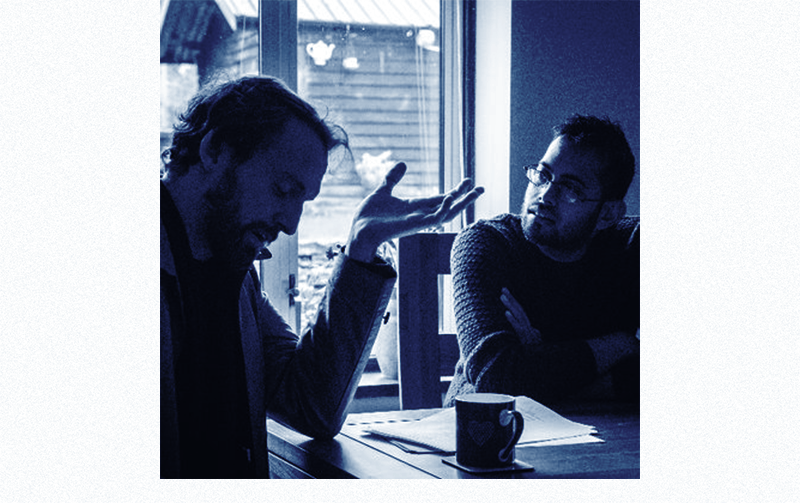
    Download the full briefing document “Mind the Digital Skills Gap” by Charles Freeman (Creative Network South) HERE!

    Hosted by Making Waves Film Festival, Portsmouth’s annual film festival celebrating its 10th anniversary edition in 2022.

    PANEL MEMBERS

    Roy Hanney

    Dr. Roy Hanney (Panel Chair)

    Working with local businesses to support talent development in the creative industries.

    Roy Hanney has over 20 years’ experience of teaching in higher education prior to which he worked in the UK film and television industry for 15 years as a production technician for a range of broadcast, commercial and corporate clients. Roy is director of the DVMISSION 48 Hour Film Challenge, an annual film-making event which is now in its 17th edition. His work as director of Portsmouth’s annual Making Waves Film Festival now in its 10th edition, further involves him in talent development, networking, and creative industries development in the Solent region.

    Lou Doye

    Lou Doye (Panel Member)

    Immersive and emergent technology executive producer and creative director- AR/VR/MR/5G Film and TV.

    Lou Doye delights in exploring new imaginative territories with current and future immersive technologies. With proven leadership on the development of innovative audience experiences, she has motivated teams to embrace technological innovation. As digital fellow for Magic Leap and the Royal Shakespeare Company she was thrilled to be initiating relationships between creative technologists and artists. Her skills base includes; immersive technologies, pre/post production pipelines, spatial computing, augmented reality, virtual reality, 3D design, aesthetic development, UI UX design, technological interactivity/audience agency, VFX/CGI in VR, concept/scoping, strategic partnerships segmentation, investor pitches, presentations, mentorship and project evaluations.

    Phil Attfield

    Phil Attfield (Panel Member)

    Co-Founder at NextGen Skills Academy. Consultant and friend to Creative Industries, VFX artist, supervisor, producer, proprietor, educator, and mentor.

    Phil Attfield is a co-founder of NextGen Skills Academy and a VFX professional with nearly 40 years’ experience as a technician, editor, vfx artist, studio proprietor and skills champion.  A nominee for BAFTA TV and Emmy awards he has more than 20 feature film credits including the Academy Award winning ‘The King’s Speech’.  Phil uses his experience and network to develop courses, qualifications, apprenticeship standards and progression routes for talent, driving the NexGen aim of creating a more diverse and inclusive workforce for the Games, Animation and VFX industries.

    REGISTER HERE FOR THIS FREE EVENT

    Photo by Marvin Meyer on Unsplash

  • ALI & AVA: ONCE UPON A TIME IN BRADFORD

    ALI & AVA: ONCE UPON A TIME IN BRADFORD

    Realism meets romance in Clio Barnard’s refreshing love story.

    Nominated for two BAFTA’s (Outstanding British Film and Best Actor), Ali & Ava is the centrepiece of Making Waves Film Festival 2022. Written and directed by Clio Barnard, this contemporary romance is a bold move for one of Britain’s most talented and original filmmakers.

    Barnard has earned widespread critical acclaim and multiple awards for The Arbor (2010), The Selfish Giant (2013) and Dark River (2017). Exploring dark and tragic themes across post-industrial and rural Yorkshire with a mix of professional and non-actors, her cinematic social realism and poetic naturalism has been compared to Ken Loach and Lynne Ramsay. Ali & Ava, a feel-good romance, might seem a surprising follow up.

    Ali & Ava meet in the rain. Ali is a happy-go-lucky landlord who occasionally gives his tenants’ daughter Sofia a lift to school. Ava is Sofia’s classroom assistant. Ali & Ava’s first encounter is fleeting, little more than a glance. Their second is a rain-drenched journey across Bradford as Ali offers reluctant Ava a lift home. Add a frisson of sexual tension and we have a classic meet-cute. Sounds like the start of a romcom? It is… sort of.

    Adeel Akhtar’s Ali and Claire Rushbrook’s Ava are the eponymous star-crossed lovers embarking on a secret romance. A Bradford-born DJ and landlord, Ali lives in the predominantly South Asian neighbourhood of BD3 with his estranged wife Runa. He is determined to keep their separation hidden from his Bengal British Muslim family.

    Ava is a teaching assistant from an Irish Catholic family. A widow whose husband was an abusive bully, she lives in the white working class neighbourhood of BD4. Her house is always open, a revolving door of children and grandchildren.

    Ali loves dance music and when Ava shares her love of folk and country he thinks their friendship is over before it has begun.

    “Oh that’s it, that’s it for me,” he says jokingly offering to pull the car over.

    But this is a love story and it’s not long before Ali is dancing on the sofa to Sylvan Esso’s Radio next to Ava singing along to Karen Dalton’s Something On Your Mind: a headphone disco for two. It’s an extraordinary scene, a worthy addition to any list of all-time-great-romantic-movie-moments.

    Of course, once upon a time comes before happy ever after and Barnard’s middle-aged protagonists have plenty of obstacles to overcome. Ava’s son Callum is fiercely opposed to her new relationship and chases Ali from the house while wielding a sword. Ali is still desperately in love with his first wife who longs for him to reveal their separation to his family. Ava still struggles with the memory of her abusive partner. Thinking he’s having an affair, Ali’s sister accuses him of running around with a “gori (white) chav.”

    The history of romance in film has been rocky to say the least. With the great love stories consigned to the 20th century golden age of cinema, for many the genre is now synonymous with “fluff,” “melodrama,” and “clichés.” It is interesting then to note that Ali & Ava marks an evolution, not a departure, from the sombre reflection of Barnard’s early work. While Barnard treads fearlessly onto romantic ground with Ali & Ava, she retains her trademark social realism.

    “If you’re brave enough to climb up, you’ve got to be brave enough to climb down,” says Ava with practised patience to Sofia who gets stuck on the school climbing frame. 

    If you’re brave enough to show the love, you’ve got to be brave enough to show the pain. Such is the thesis of Ali & Ava. While the film leans into pain and trauma, it never dwells. Romance is tempered with reality and, in Barnard’s words, “joy becomes an act of defiance”. Nowhere is this clearer than when a group of schoolchildren throw stones at Ali’s car as he drives Ava home. Ali quickly wins them over by turning up the stereo in his car and encouraging them to sing and dance along.

    As Ali & Ava cultivate space for love in their complicated lives, it becomes apparent that love is a choice. It doesn’t negate the pain, it isn’t a miracle cure. Sometimes choosing love is the more difficult choice. Barnard reminds us it’s the right one.

    After all, she chose love when she decided to make a diagetic romantic musical set in Bradford. With its euphoric soundtrack, Ali & Ava is a love letter not just to its titular characters but to the city. Bradford is beautifully shot by Judy cinematography Ole Birkeland with twinkling lights, less a post-industrial wasteland waiting for the Conservatives to level up the North; more a city of hope. Unlike most romantic films the central couple don’t exist in a vacuum and neither does the film. As Ali and Ava are woven into the fabric of their community so is Barnard’s filmmaking, inspired by, made with and for the people of Bradford.

    It feels important, during a time of divisiveness fuelled by politicians, Brexit polls and world events, to celebrate love and kindness. To be reminded that within the ordinary everyday we can find the most extraordinary capacity to love.

    Yes, Ali & Ava is a love story. It’s also more than that. With exquisite writing, sensitive direction and mesmerising performances, Barnard’s film reminds us that the language of love is universal. More than ever we need a language we all speak to connect us and although happy ever after might not be guaranteed (no spoilers here), once upon a time is today. Love is a choice.

    Making Waves Film Festival will present a special screening of Ali & Ava preceded by a Wave Makers Q&A with Score Composer Harry Escott, winner of the Best Music British Independent Film Awards 2021. Thursday 21 April at 7pm, No 6 Cinema, Portsmouth. Book online via No 6 Cinema.

    By Sophie Thomas

  • The Cinematic Style of Wes Anderson

    The Cinematic Style of Wes Anderson

    The extravagant visual style of Wes Anderson is one that has been discussed a lot in the world of film and for good reason. He is a major inspiration for my interest in film and filmmaking. I am in awe of the unique way Anderson brings storytelling to life and the relationship between all the visual, cinematic and technical elements presented in his films. So, let’s explore further exactly what it is that makes a Wes Anderson film the way it is.
    Symmetry

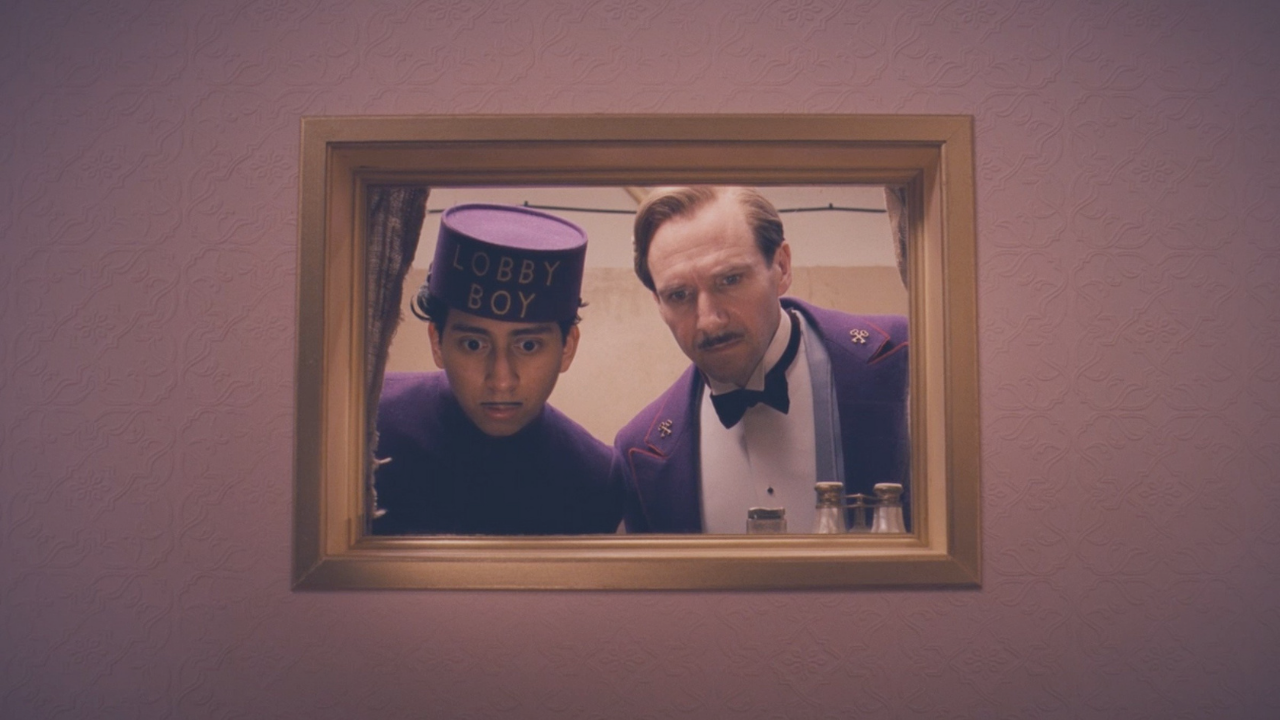
    Symmetry is one of the most notable Anderson features. Action on screen is unusually centralised and/or mirrored which draws our attention to the precision involved. Plus, the psychological connection between the human brain and symmetry could explain why its use is so mesmerising.

    Timothee Chalamet in Wes Anderson's The French Dispatch
    The French Dispatch (2021)

    Planimetric Composition (and Compass Point Editing)

    Planimetric composition (when the camera is perpendicular to elements of the scene) is what makes his shots appear two dimensional. Characters generally move horizontally or vertically in relation to these plains and the camera. Anderson also uses compass point editing techniques such as whip pans in 90 degree increments to maintain this composition. The resulting effect? The filmic space looks and feels constructed and the viewer is likely conscious of this fact. The debate here is whether this effectively contributes to the cinematic experience or if it takes the viewer out of the film instead.

    The Grand Budapest Hotel (2014)

    Colour

    Another stand out feature of the Wes Anderson style is colour. Notably, each movie has its own colour palette – usually charming pastel colours. When he does use bright colours, it is in contrast to sad events. This overall exaggerated use of colour creates a world far removed from reality which allows Anderson to get away with more extraordinary plots.

    The Life Aquatic with Steve Zissou (2004)

    Storytelling

    As a common thread, Wes Anderson films seem to want to highlight the ‘cinema’ of it all rather than hide the filmmaking. His films are often presented as stories within stories: Moonrise Kingdom (2012) has a narrator who speaks to the camera, Rushmore (1998) uses curtains to separate chapters like a play, and The Darjeeling Limited (2007) has a character who seems to be writing the story we’re inside of.

    The Darjeeling Limited (2007)

    It’s almost impossible to talk in depth about absolutely everything that goes into a Wes Anderson film. There’s also slow motion, tracking shots, typography and more. However, the points I’ve chosen to discuss start to break down key visual and aesthetic choices. Might go and rewatch The Grand Budapest Hotel for the fifth time now…

  • No6 Cinema: Perhaps Six is the Magic Number?

    No6 Cinema: Perhaps Six is the Magic Number?

    This is what Malisa Chafer has to say about the No.6 Cinema, the hidden gem on the Southsea coast where she sits as volunteer chairwoman.

    “The cultural landscape of any society is really vital to keep alive and although we’re a really small outfit we feel we’re a little sort of treasure in Portsmouth.”

    Malisa Chafer, No.6 Cinema

    Tucked away in the Historic Dockyard on the coast of Portsmouth stands a building still making history as the only independent cinema in the city. I met with Malisa to see the inner workings of the cinema (at her request). She said that it would be worthwhile to see how everything functions there – and it certainly was an intriguing experience.
    A wave of excitement came over me at what I was going to discover. Not at all what you would expect to see behind the strong bland walls that encircled it, it almost transcended time. It didn’t feel like you were encompassed at all.

    As I walk through the tall walls of the dockyard I was immediately transported, as modern architectural touches mix with centuries-old naval buildings and wide, empty walkways contrast with the hustle and bustle of the nearby city centre I’d just left. Then, tucked in the corner, hidden an unfair amount, this little pocket of movie magic.

    No 6 cinema is located in the Grade ll listed Boathouse 6 building, built in 1846. To reach it, you have to walk through the Historic Dockyard’s impressive Victory Gate and on for 50 metres before taking a right turn into College Road – blink and you’ll miss it.

    The 275-seater auditorium boasts one of the biggest screens on the south coast and promises an eclectic mixture of classic movies, heritage titles and documentaries in its programme. Highlights in the coming weeks include Death on the Nile, The Good, the Bad, the Ugly, Cyrano and Jules et Jim.

    The cinema is clearly kept going by people who really care about contributing to the creative background of Portsmouth through cinema. Seeing the screen, standing tall over a hall of absolute atmosphere even when the 275 seats are mostly empty, classic old music playing over the sound system, continued the blend of modern and old fashioned that contributes to the individuality that is No6 Cinema.

    The experience of being there, this classic, romanticised experience of cinema, reminds me of going to the theatre. The experience, the building, the art all means so much more.

    Malisa Chafer is a happy, creative, passionate woman. In pauses of conversation and moments of thought, my eyes wander to a colourful necklace hanging around her neck which clearly demonstrates an artistic personality. In a half-hour interview, she is rarely hardly lost for things to say about the ways in which cinema – and independent cinema specifically – benefits its audiences.

    Malisa shares her thoughts on the brilliant way in which cinema can tell a story or convey a message to an audience. We speak about an exciting upcoming time in which student filmmakers and development in technology bring immense improvement and opportunities.

    As Malisa says, it is passionate people keeping cinema and other creative industries alive.

    “It’s difficult to know how cinema will evolve,” she says. We agree that in many ways cinema survival is down to younger people, student filmmakers as well as students coming into the cinema. Chafer shares how the cinema endeavours to help student filmmakers however they can, whether screening their films or acting as sources of information and offer younger audiences tickets at the discounted rate of £5.

    No.6 Cinema flourishes with the help of many volunteers working together to construct a really enjoyable experience. According to Chafer movies just need to be “quality” films to make it into the programme but the definition of “quality” is not an exact formula.

    Malisa speaks of being very pleased and excited when Making Waves Film Festival came to No.6 Cinema regarding a possible partnership. In her mind, it is a big achievement and she is always happy to collaborate with other people.

    In partnership with Making Waves, No. 6 Cinema will be conducting multiple events including a silent movie screening. In a development process that began with a movie of minimal dialogue, this was then quietened and an original soundtrack composed.

    As Malisa and I sit and converse, I watch as their audience arrives in advance of the night’s movie screening. Couples, friendship groups and even lone viewers sit in the cafe enjoying snacks and drinks and making conversation about such topics as journalism, music and film. The big space is filled with a kind of sophisticated ambience with a fizzing excitement.

    Find out more about No.6 Cinema at https://www.no6cinema.co.uk/

    By Louisa Clarke

  • Local Talent Spotlight: Trash Arts

    Local Talent Spotlight: Trash Arts

    Next up in the Making Waves initiative to explore Portsmouth’s local creative community and why they do what they do is indie-focused production company Trash Arts. Below is just a snippet of what they got up to in 2021!

    Trash Arts is “a collective of creative minds” that aims to champion all forms of art. They have made short films, feature films, music videos, promotional videos, and documentaries. They also host spoken word and poetry nights and variety shows for example Trash Arts’ Open Ya Mouth which encourages performers of all levels to have a go at an open mic event.
    Here Sam Mason Bell, founder of Trash Arts and ex-director of Making Waves Film Festival, gives his thoughts on the Portsmouth filmmaking scene:

    How would you describe what Trash Arts does to those coming across you for the first time?

    “Trash Arts is a production company focusing on independent films and indie horror, growing new talent and championing indie filmmakers.”

    What is it about Portsmouth and the wider Hampshire area that you think makes it such a great place for filmmakers and creatives?

    “I am born and raised in Portsmouth; it has [a] fantastic development structure [and] you can go through the poorest housing to the richest housing within a heartbeat. Sure that’s not great for the country or for the people but to have [a] richness of locations close by certainly helps. Having the seaside, the woods, Portsdown Hill so close is fantastic! Not going to lie, will always feel the city council should do more to allow free locations for film makers, maybe one day…”

    Why do you think a film festival in Portsmouth is so important?

    “Portsmouth has had a problem with supporting its artists, whether that’s down to lack of interest from the city council or the hideous competitive nature of Portsmouth. A film festival offers an opportunity for artists to be supported and for them to network with other artists. Also with so many emerging film festivals it can only help to entice an audience down to Portsmouth for the city to actually have an event!” Make sure to check out Making Waves’ film festival programme for 2022.

    What’s going on at your company right now or in the coming months that you’d like to promote?

    “Trash Arts has a few films in pre and post production. This year we are taking more of a creative focus on Portsmouth, its history and its rather crazy folklore.”

    You can find more information about Trash Arts through their youtube channel and their social media pages linked here:

    Instagram: https://www.instagram.com/trashartsuk/?hl=en 

    Facebook: https://www.facebook.com/trashartsuk/ 

    Twitter: https://twitter.com/trashartsfilm

    LinkedIn: https://www.linkedin.com/company/trash-arts-ltd/

  • Riyadh Haque on Film Festival Communities

    Riyadh Haque on Film Festival Communities

    I spoke with University lecturer and active practitioner, Riyadh Haque, about his take on the role of a film festival among county-wide communities as well as his personal career before, and during, his residency in Portsmouth. 

    (‘White Coffee’ – A short film directed by Riyadh Haque)

    Riyadh, What filmmaking or media projects have you worked on locally, in the Hampshire area?

    “Unfortunately, I can’t expose the details of many projects I have been involved with publicly. I can, however, briefly mention a comission project I worked on that was shot on 35mm film. The film was funded externally. We did, though, made a conscious decision to source as much of our talent and crew from the local area. This enabled us to support local, up and coming, keen filmmakers and get them involved in larger scale productions.”

    Why do you think a film festival in Portsmouth is necessary?

    “The film festival is always at the centre of the community in that area. Whilst I believe film festivals are great, they’re not usually enough on their own. The festivals host events once or twice a year and they’re great, but it can’t be left to this. Continuing to hone and support the local community is the real role of a film festival. It should be the buzzing hub at the core of a group of like-minded people.”

    What project are you most excited about being involved in, either locally or otherwise, in the coming months?

    “Ultimately, there are constantly projects and work that I am involved in, both locally and otherwise. The thing I’m really excited about being involved in is right here at Portsmouth University. Encouraging students to become the filmmakers they want to be. I have the opportunity to grow a community of young filmmakers that will surround things like Making Waves. I’d like to nurture the talent I can see here as much as possible going forward. Building upon the community we have in Portsmouth, thus growing the tomorrow’s community is what I am most excited about.”

    Riyadh’s contacts:

    Twitter – https://twitter.com/ifilmlove

    LinkedIn – https://www.linkedin.com/in/riyadhhaque/ 

  • Local Talent Spotlight: Millstream Productions

    Local Talent Spotlight: Millstream Productions

    As a young filmmaker and film enthusiast living in Portsmouth, I find discovering local talent and talking to professionals is not just valuable but genuinely enjoyable. Therefore, this series from Making Waves Film Festival aims to put this passion into practice by exploring content creators in Portsmouth and the surrounding area, what they do, and why they do it. Recently, I got the chance to chat with Millstream Productions. Watch their showreel and then read on to find out all about them!

    Currently celebrating their tenth anniversary, Millstream Productions are one of the leading and most established video production agencies in Hampshire. In their own words: “each year we create quality video content for global brands, forward thinking companies and the public sector”. That covers corporate, social, animation and documentary! Millstream have also produced content for high profile brands including the NHS, Porsche, and the University of Portsmouth.

    Here is a short interview with Ben Cloud, the co-founder and creative director of Millstream.

    What is it about Portsmouth and the wider Hampshire area that you think makes it such a great place for filmmakers and creatives?

    “Portsmouth is where we’re from. It’s a fiercely proud city with a unique community and we love working within the city and surrounding areas. There is a wealth of creative talent coming out of the University and colleges each year and they bring life to the city. It’s an amazing place to create content because of the forward thinking attitude of the people here. Of course, the varied coastal, city and countryside locations make it a perfect place for filming.”

    Why do you think a film festival in Portsmouth is so important?

    “As filmmakers, we produce work to be seen and not kept on [a] hard drive! People enjoying other’s work is why we get out of bed in the morning and there’s no better feeling of celebrating the hard work and creativity that goes into producing a film.” Make sure to check out Making Waves’ short film competition for 2022.

    What’s going on at your company right now or in the coming months that you’d like to promote?

    “We’ve recently celebrated our tenth year and are so proud to have produced more than 3,000 videos, travelled the world and now employ 9 local filmmakers. We’re excited to be more involved in our local community and developing filmmaking skills with those that work with us.”

    You can find more information about Millstream Productions through their website and their social media pages linked here.

    Instagram: https://www.instagram.com/millstreamproductions/

    Facebook: https://www.facebook.com/MillstreamProductions 

    Twitter: https://twitter.com/millstreamprod

    LinkedIn: https://www.linkedin.com/company/millstream-productions/

  • The Making Of Carmilla

    The Making Of Carmilla

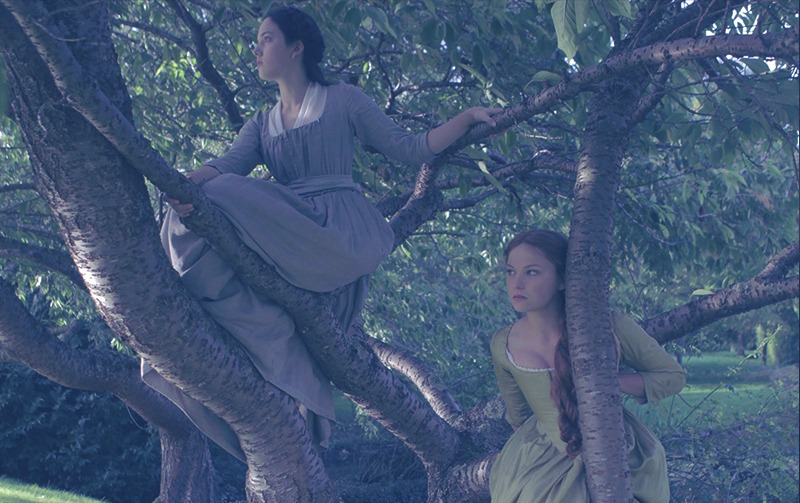
    For her first solo-directorial credit, Emily Harris has stripped Carmilla of its vampiric nature and instead explores deeper themes of repression, superstition and adolescent love.

    Set in late 18th Century rural England, Carmilla is a tender and tragic love story between two young girls. Based on gothic literature, this tale of blossoming adolescent sexuality takes place at a time when religion, repression, fear, and superstition ruled society.

    At the helm, is writer-director Emily Harris, who set out to steer Carmilla away from traditional costume dramas. 

    For Harris, this was her first time taking a solo directorial credit, after co-directing Love Is Thicker Than Water(2016) with Ate de Jong. Harris has always been a collaborator, and found co-directing natural, but Carmilla felt different. To Harris, this one made a lot of sense to do by herself.

    Harris began writing the script after she came across Carmilla, a gothic novella by Irish writer Joseph Sheridan Le Fanu.

    Keen to remove the vampiric thread within the story Harris says: “I was more interested in understanding the root of that literature. Why were people writing about that? What does it symbolize and signify and what’s the human story underneath it?”

    The search for actresses to play lead characters was believed to be fundamental to the success of the project. Harris admits, “I kept saying, ‘If we don’t find Carmilla and Lara, we don’t make this. There’s no way.” 

    Finding the actress to play Carmilla was a Eureka moment. Newcomer Devrim Lingnau sent in a series of self-taped auditions and it was clear that she instinctively understood the character.

    British actress Hannah Rae, cast as Lara, was bowled over by Harris’ script. “I visualised it in my head straight away. And so that’s what attracted me initially”. Rae’s only previous feature was in the TV drama Broadchurch.

    Join us for a pre-screening Q&A with Emily Harris, hosted by Professor Deborah Shaw, from the University of Portsmouth, at our screening of Carmilla at the No6 Cinema on 16th September.

    Event Information

    Where: No6 Cinema, Boathouse 6, HM Naval Base, Portsmouth PO1 3LJ

    Box Office: 07435 029408

    Website: https://www.no6cinema.co.uk/

    Tickets: £9, Concessions £7.50, 25 & Under £5.00, CEA Carer £0.00

    If you would like to find out more about No6 Cinema then make sure to follow them on Twitter, Instagram and join their Facebook page.

    NOTE: all events are subject to government restrictions on safe distancing and public gatherings and will be risk assessed accordingly. As events progress, we will update you on our plans for the live film festival programme in case of changes to what may be possible at the time.

    A MWFF event in partnership with No.6 Cinema and Republic Film Distribution.

  • A Closer Look: Moving Image Criticism – Creating Engaging Narrative

    Creating Engaging Narrative

    By Callum Tomalin

    How does Wallace and Gromit use short film to create an engaging narrative.

    If you love stop motion films, engaging narratives, Ardman Animations or are just a huge fan of Wallace and Gromit I would highly recommend you check out this video which gives a great descriptive insight into the world of Wallace and Gromit and how they use short film to create an engaging narrative. In this video Callum does an excellent job of highlighting the unique way the narrative works and affects us from the film ‘Walace and Gromit: The Wrong Trousers,’ as someone who has not seen the classic since I was a child it was great to see an explanation of what made it so great, as I would have taken the narrative and ways of engagements for granted. Because of what Callum states in this video, it has made me want to re-visit ‘The Wrong Trousers’ to watch the story unfold with a better understanding of what makes the film tick as well as venture into the other movies that Callum mentions (A Grand Day out to be precise).

    Young video essayists comment on popular audio-visual culture – Making Waves Film Festival brings you the best in videographic criticism.

    Produced as part of the BA (Hons) Film and Television degree at Solent University

    TWITTER @FilmTVSolent

    FACEBOOK https://www.facebook.com/FilmSolent

  • A Closer Look: Moving Image Criticism – Slow Cinema

    Slow Cinema

    By Cameron Niblock

    Temporality in Slow Cinema – A critical analysis on the Long-Take & it’s application to ‘prologue’ by Béla Tarr & ‘No No Sleep’ by Tsai Ming-Liang.

    Do not be daunted by the elaborate title, Cameron easily guides you through this intriguing, specific look at the “Long-Take” in film both old and new most specifically how it is utilized as a story telling tool used in slow cinema. As someone who watches quite a bit of film you might have seen some of the shots that Cameron shows us, what you like me might not know is how the shot itself can affect us and change the way we view the film bringing us closer into the narrative. And if you perhaps know about the “Long-Take” and all the interesting details about why it is used, how it impacts the narrative and how it is used in slow cinema, I believe you should still watch this video to learn about the different directors who utilize this shot as well as get great new film suggestions for your watchlist you might not have heard of before. After watching this prolific analysis, I went straight to my streaming services to see if I could find one of the directors Cameron talks about Béla Tarr. This video is a fantastic way to brush up on your shot types and see if you can spot any long takes in any of your favourite films.

    Young video essayists comment on popular audio-visual culture – Making Waves Film Festival brings you the best in videographic criticism.

    Produced as part of the BA (Hons) Film and Television degree at Solent University

    TWITTER @FilmTVSolent

    FACEBOOK https://www.facebook.com/FilmSolent